 EasyEasy4–5 hours a day · Below 3,500 mWell-made trails, teahouses close together, and nothing that needs a head for heights. Anyone who walks regularly at home will be comfortable.
Kathmandu Valley Heritage Tour
Seven days and all seven UNESCO monument zones of the Kathmandu Valley, one royal city at a time, with a night on the Nagarkot ridge for the sunrise and every entry fee already paid.
from$640
per person, twin share
- 7 days
- 7 UNESCO sites
- EasyEasy4–5 hours a day · Below 3,500 mWell-made trails, teahouses close together, and nothing that needs a head for heights. Anyone who walks regularly at home will be comfortable.
- Family friendly
Adventure Milestone Treks Pvt. Ltd.
Kathmandu Valley Heritage Tour
Seven days and all seven UNESCO monument zones of the Kathmandu Valley, one royal city at a time, with a night on the Nagarkot ridge for the sunrise and every entry fee already paid.
7 days · Easy · 7 UNESCO sites · from $640 per person, twin share
P.O. Box 12502, Thamel, Kathmandu, Nepal · +977 9851085456 · info@adventuremilestone.com
Overview
Nearly every visitor to Nepal passes through the Kathmandu Valley and most of them see it in a day, from a car, in the order the traffic allows. It is a strange way to treat a place that holds seven UNESCO World Heritage sites inside twenty kilometres — three royal cities, two Buddhist stupas, the holiest Hindu shrine in the country and the oldest temple standing in it — and more than a hundred and thirty listed monuments besides. This is the same valley given a week instead.
The shape of it is one city a morning. Kathmandu on the second day, Patan on the third, Bhaktapur on the fourth, each with the hours it needs and lunch inside it rather than back at the hotel. Between them we put the two stupas and the river: Swayambhunath above the city, the dusk kora at Boudhanath walked rather than watched, and the 6 pm aarati on the Bagmati at Pashupatinath. The fourth night is on the Nagarkot ridge at 2,175 m, which buys you a Himalayan sunrise the day tours cannot sell, and the drive down passes Changu Narayan on its hill.
Two of the days go where the coaches do not — Bungamati and Khokana for the woodcarvers and the mustard-oil press, Kirtipur and the Chobar gorge on the last morning — because the valley is not only its monuments and a week is long enough to prove it. You travel by private vehicle with a licensed Newar guide from the valley, never in a group above twelve, and every entrance fee on the itinerary is inside the price on this page. That last part is not standard: about NPR 12,700 a head is collected at these gates, and most quotes leave it out.
Trip facts
- Duration
- 7 days6 nights
- UNESCO sites
- All sevenEvery monument zone in the valley
- Group size
- 1–12Private departures from one traveller
- Best season
- Year-roundClearest skies Oct–Apr
- Start and finish
- KathmanduAirport transfers included
- Accommodation
- 5 Kathmandu · 1 NagarkotHeritage hotels, twin share
- Meals
- 6 B · 5 L · 3 DNewari kitchens, not hotel buffets
- Transport
- Private vehicleCar, jeep or HiAce by party size
- Highest point
- 2,175 mThe Nagarkot ridge at sunrise
- On foot
- ≈ 22 kmAcross six days, all of it walkable
- Entrance fees
- All includedAbout NPR 12,700 a head at the gates
Tour highlights
- All seven UNESCO monument zones of the valley on one booking, not the usual four
- The three royal cities — Kathmandu, Patan and Bhaktapur — each given its own morning
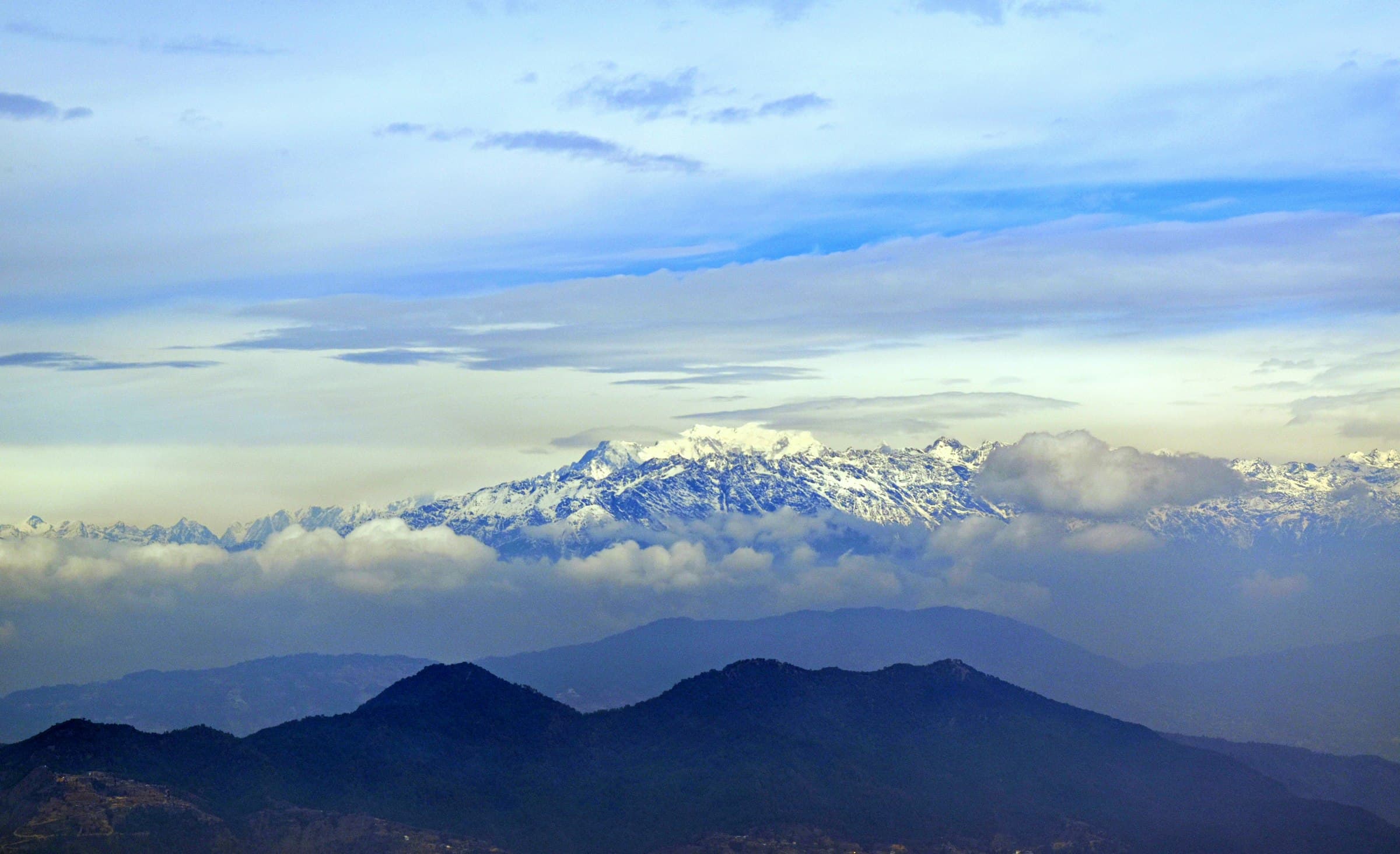
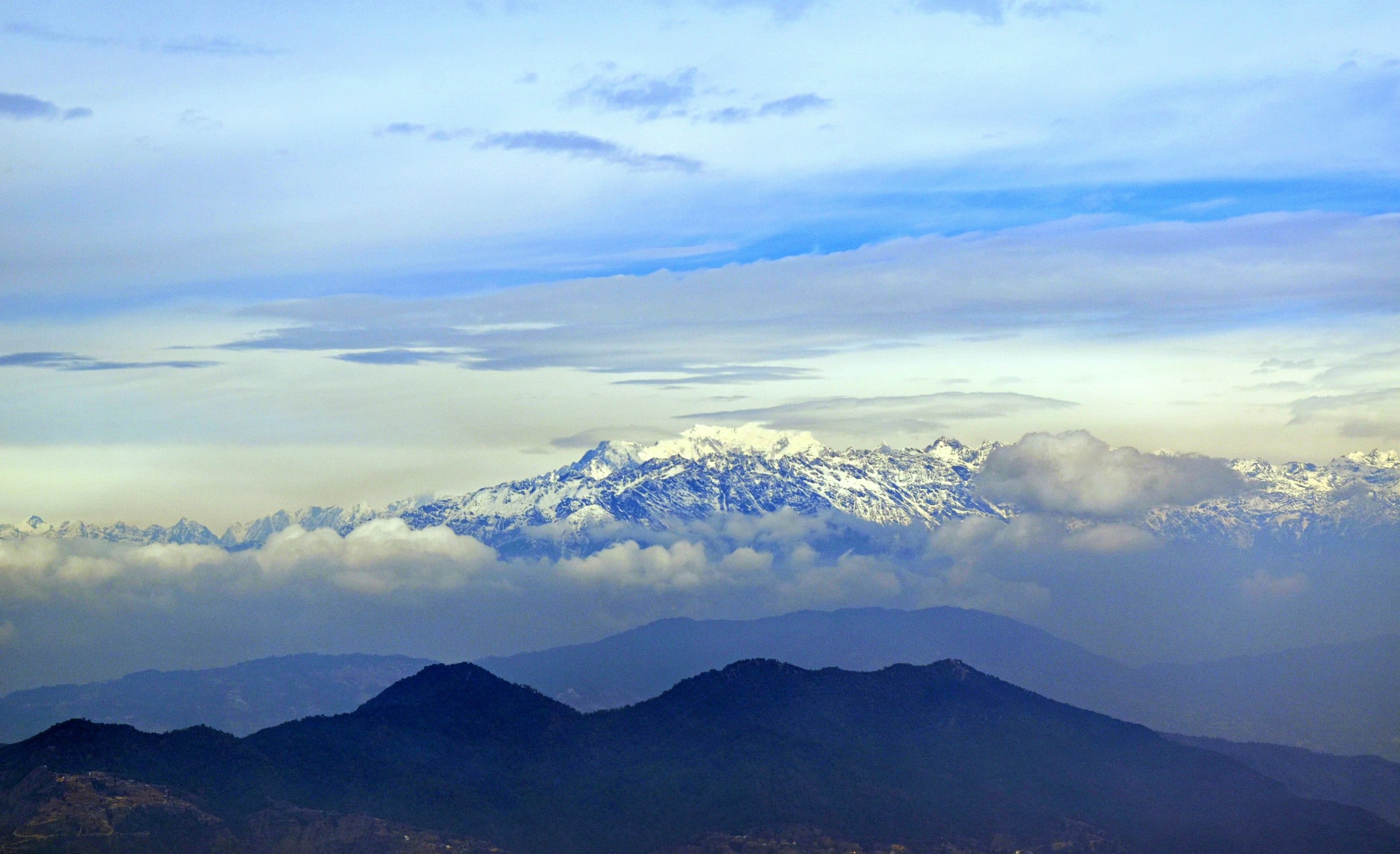
- Sunrise on Ganesh Himal, Langtang and Dorje Lakpa from the Nagarkot ridge
- The dusk kora at Boudhanath, walked with the pilgrims rather than shot from a café roof
- The 6 pm Bagmati aarati at Pashupatinath, seen from the quieter east bank
- Changu Narayan, the oldest standing temple in Nepal, and its 464 AD inscription
- Every entrance fee paid in advance — around NPR 12,700 a head, and rarely included
The seven sites, and why each one is here
UNESCO inscribed the Kathmandu Valley as a single property made of seven monument zones. Most tours of the valley cover four of them. These are all seven, in the order this itinerary reaches them.
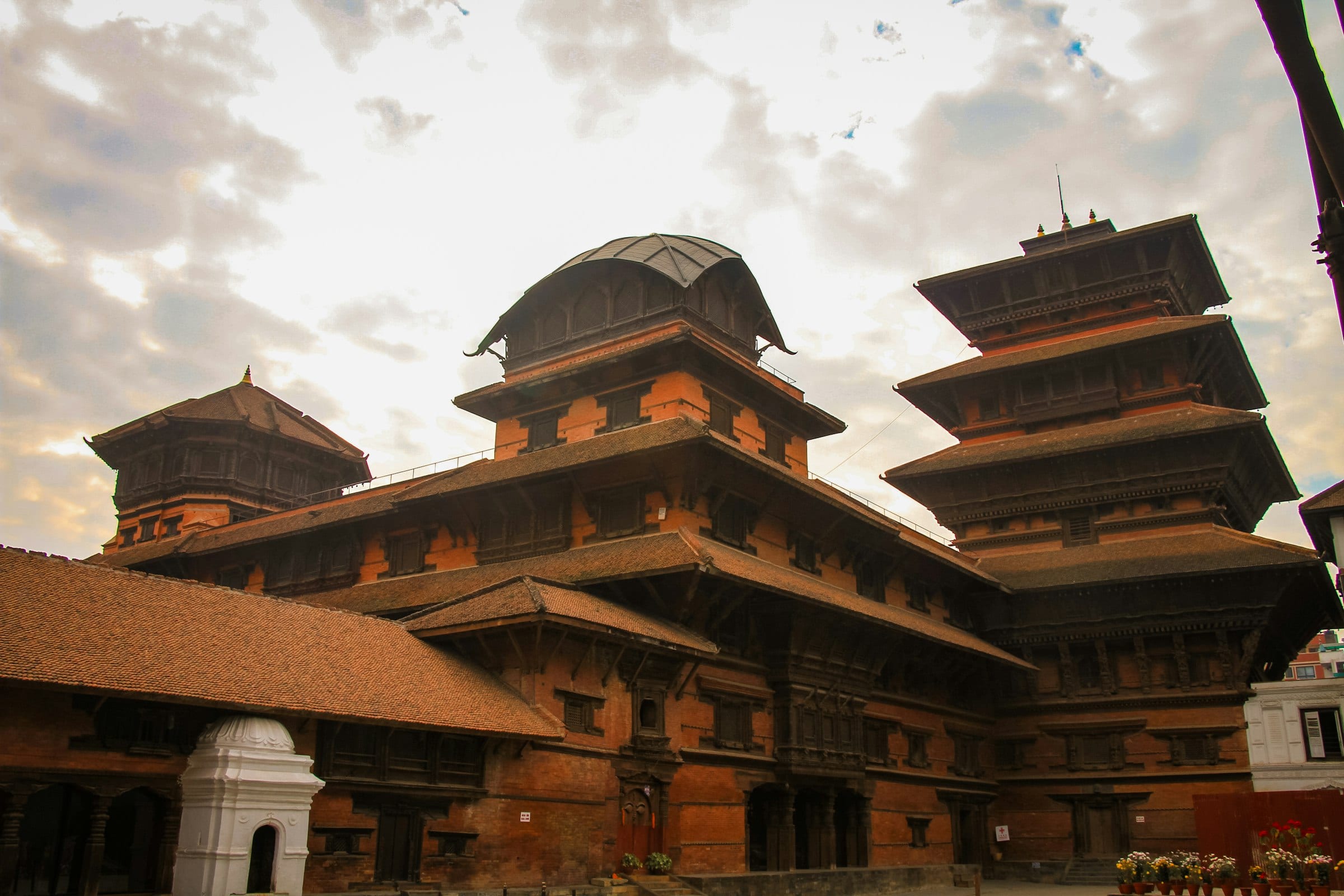
Kathmandu · Royal city
Kathmandu Durbar Square
Inscribed 1979 · palace from the 12th century
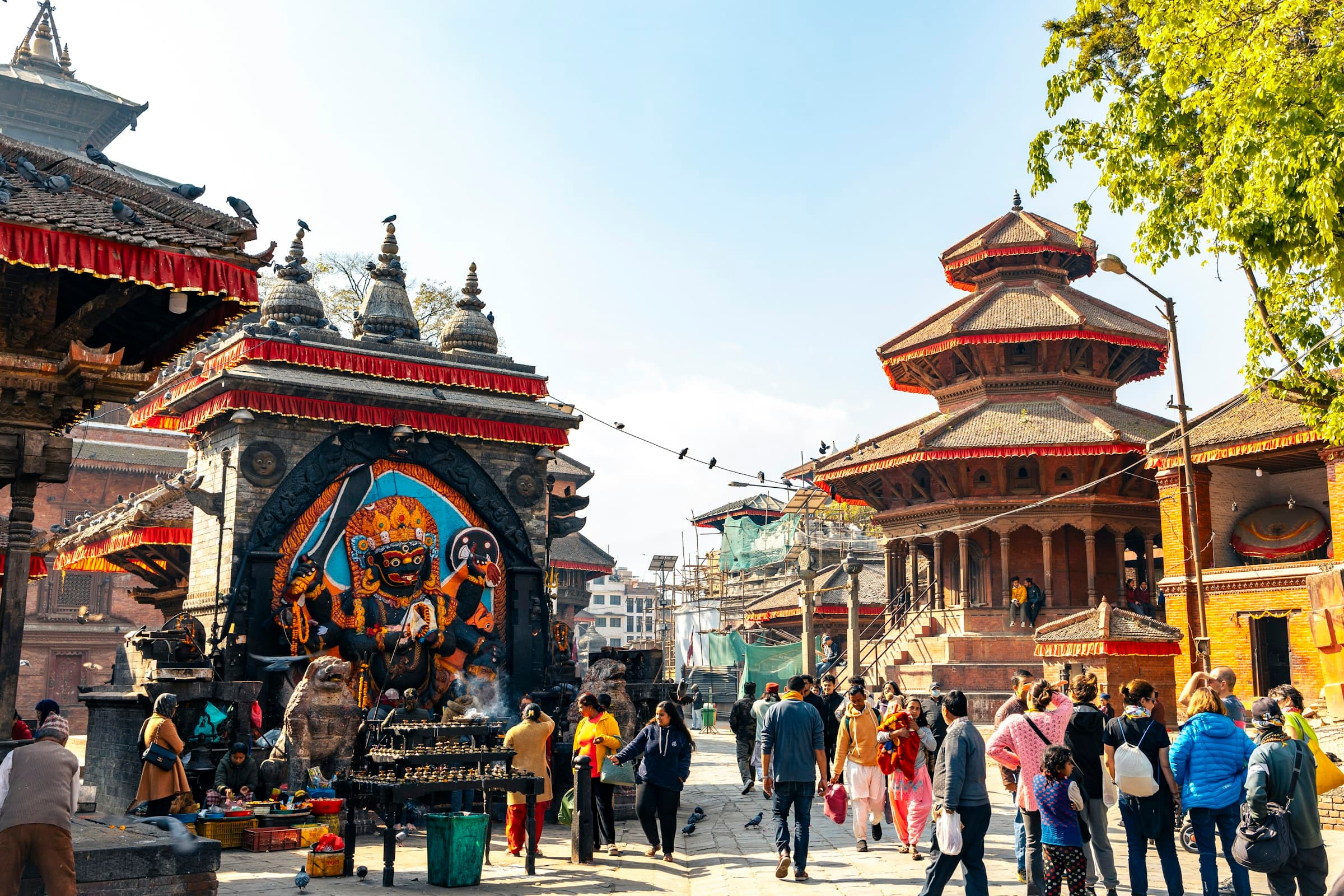
The old royal seat, and the busiest of the three squares because the city never moved away from it. The Hanuman Dhoka palace holds ten courtyards behind its gate; the Kasthamandap, the rest-house the city may be named after, has been rebuilt in its original timber since 2015. The Kumari Ghar is the reason most people stop: the living goddess is a child chosen from the Shakya caste, and she appears at a first-floor window when she chooses to, which is not on a timetable.
Photography is welcome in the square and forbidden inside the Kumari courtyard.
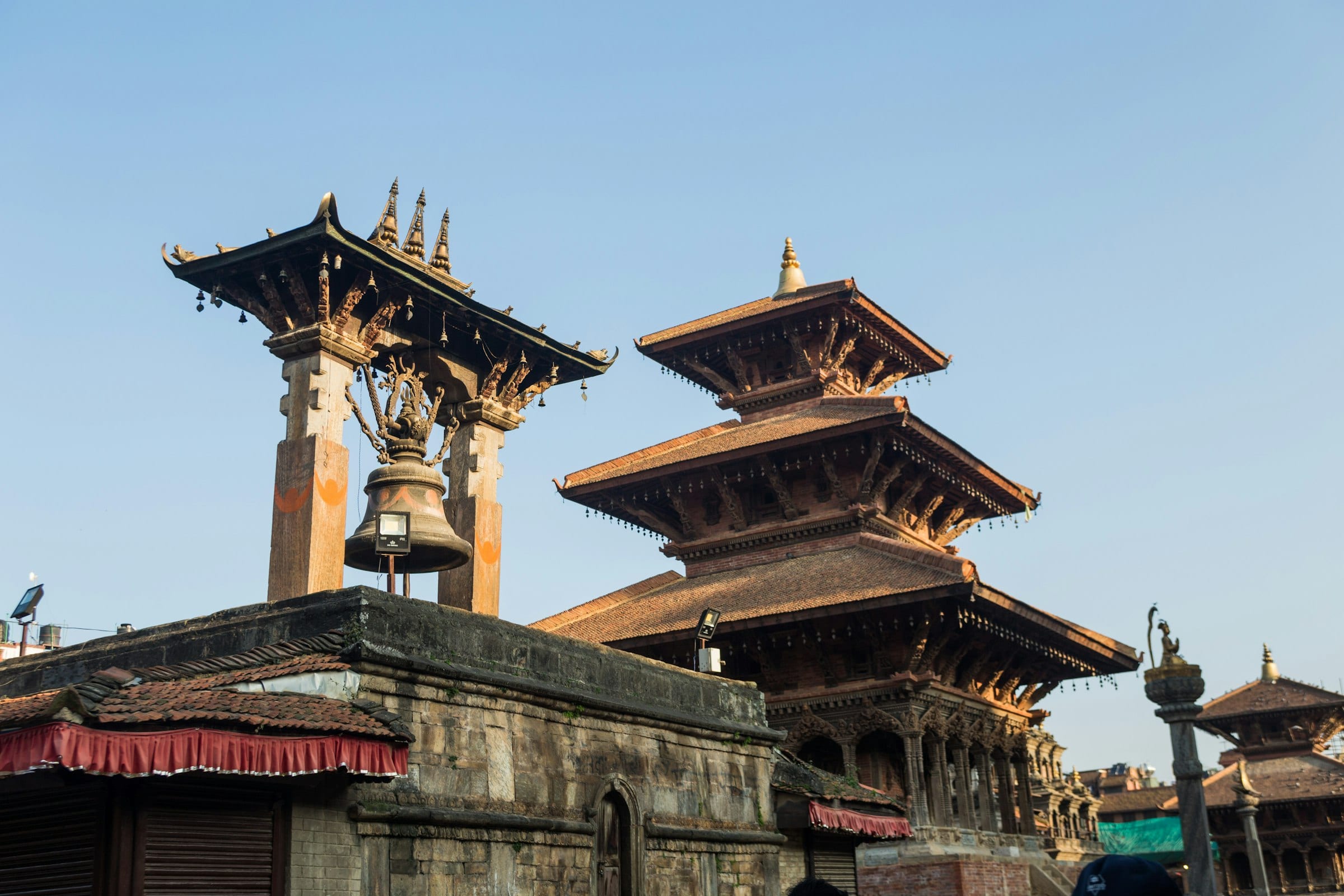
Lalitpur · Royal city
Patan Durbar Square
Inscribed 1979 · square laid out from the 14th century
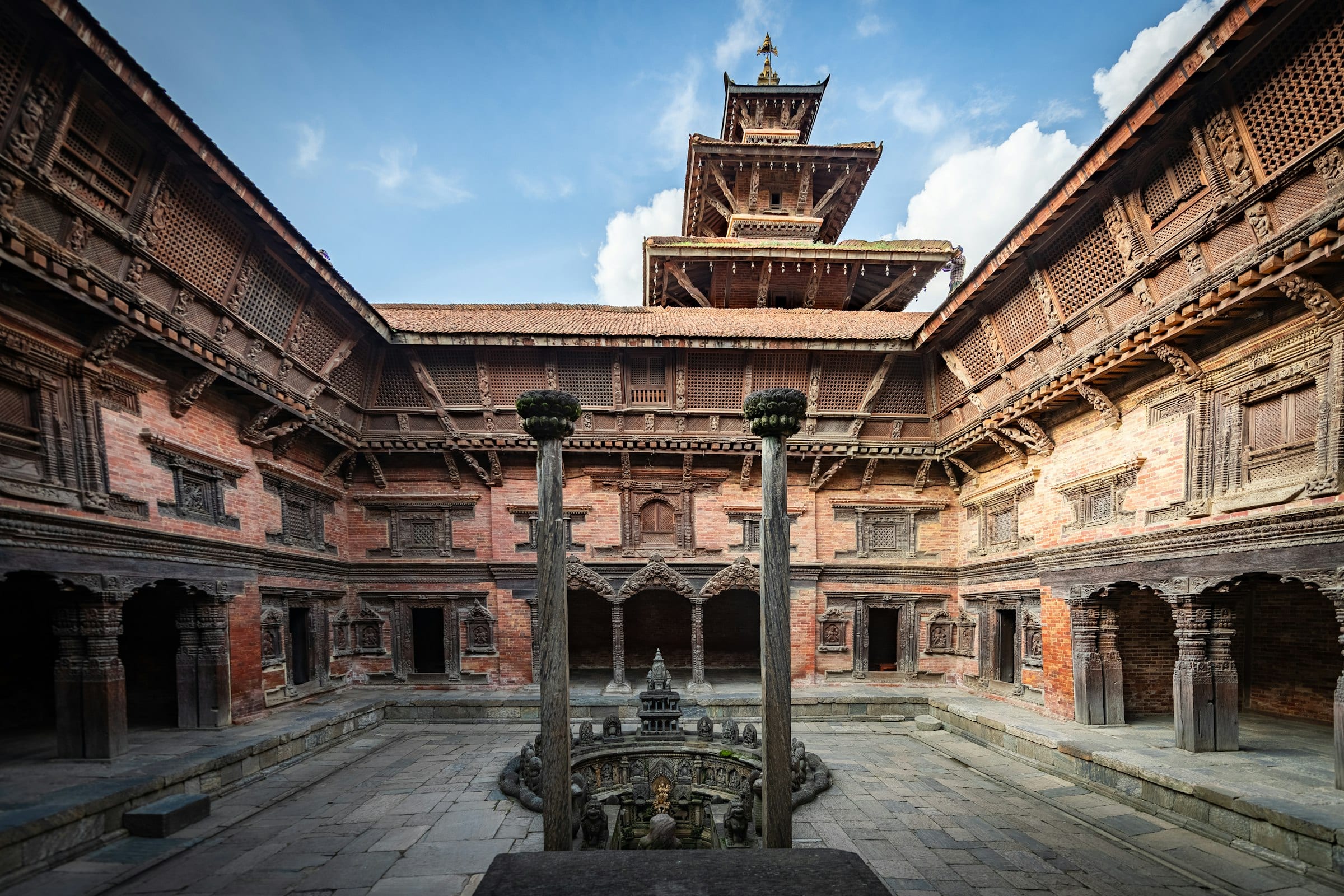
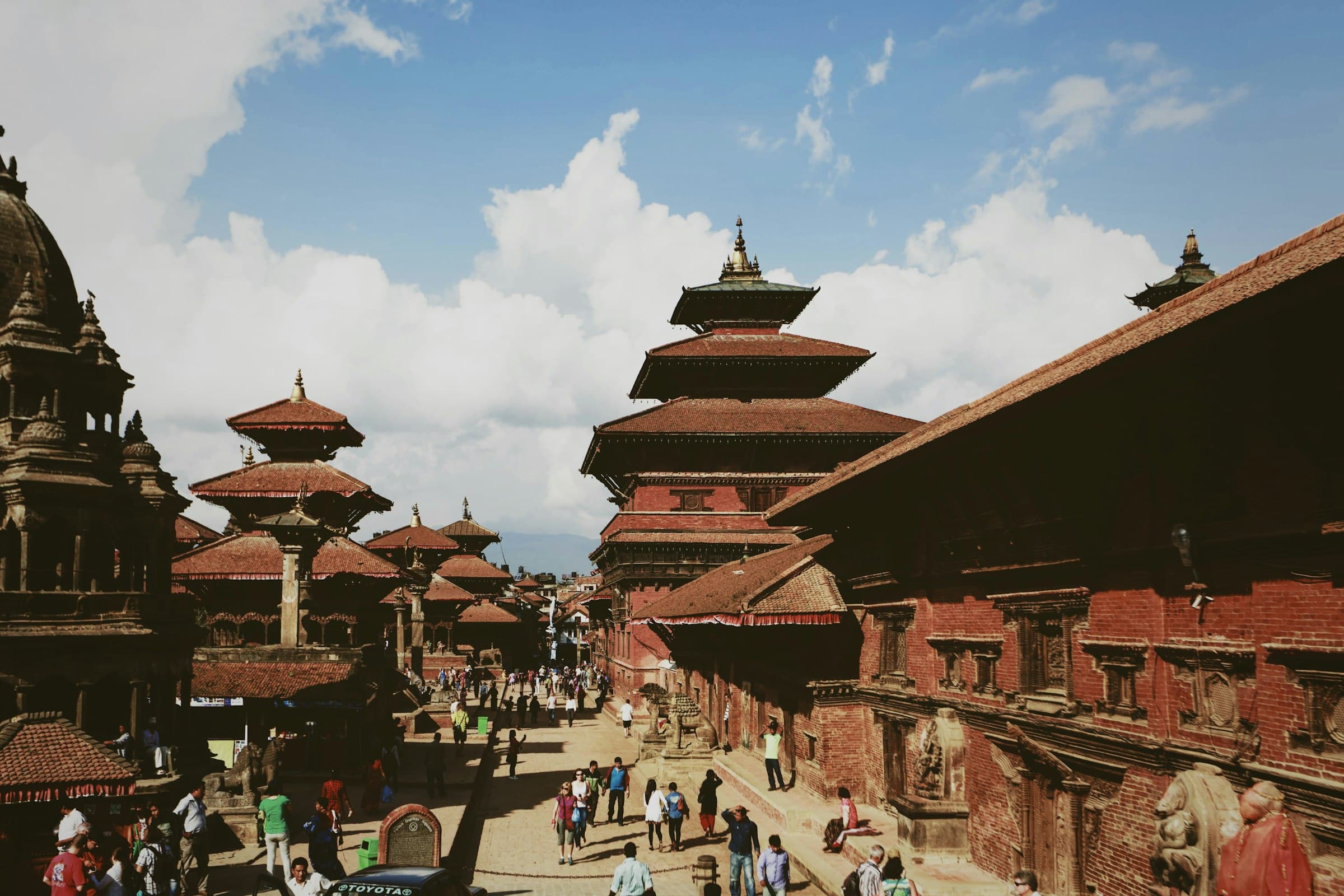
The densest and the most walkable of the three, entirely pedestrian and small enough to cross in three minutes, which is exactly why it repays three hours. The Krishna Mandir was cut from stone in 1637 and carries twenty-one gilt pinnacles. Behind it the palace runs through Sundari Chowk, with the Tusha Hiti bath sunk in its floor, to the Patan Museum — restored over a decade with Austrian help, and the finest small museum in South Asia.
Museum entry is inside your ticket; allow an hour for it, and it is the one indoor stop that suits a wet afternoon.
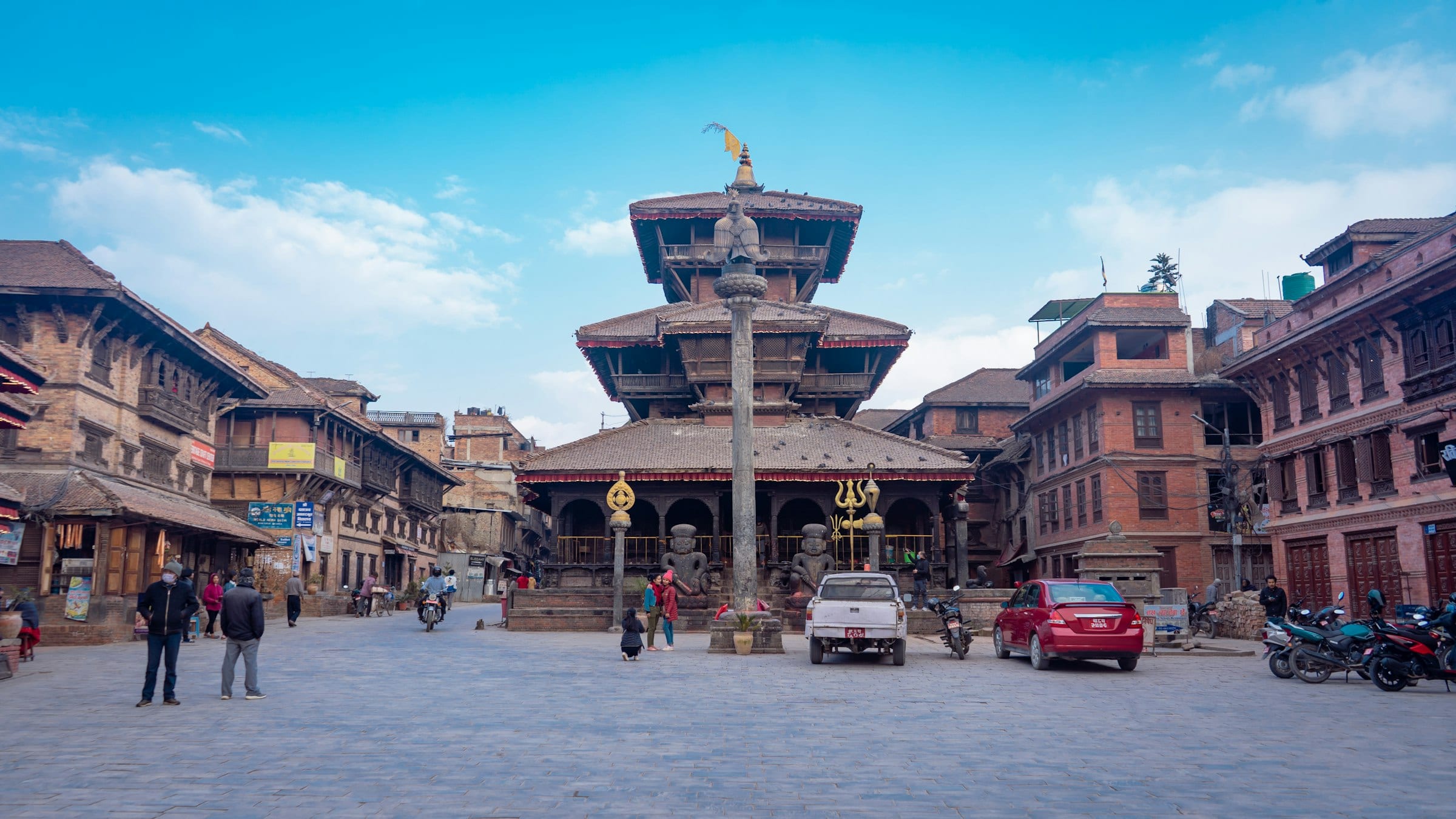
Bhaktapur · Royal city
Bhaktapur Durbar Square
Inscribed 1979 · capital of the valley to 1482
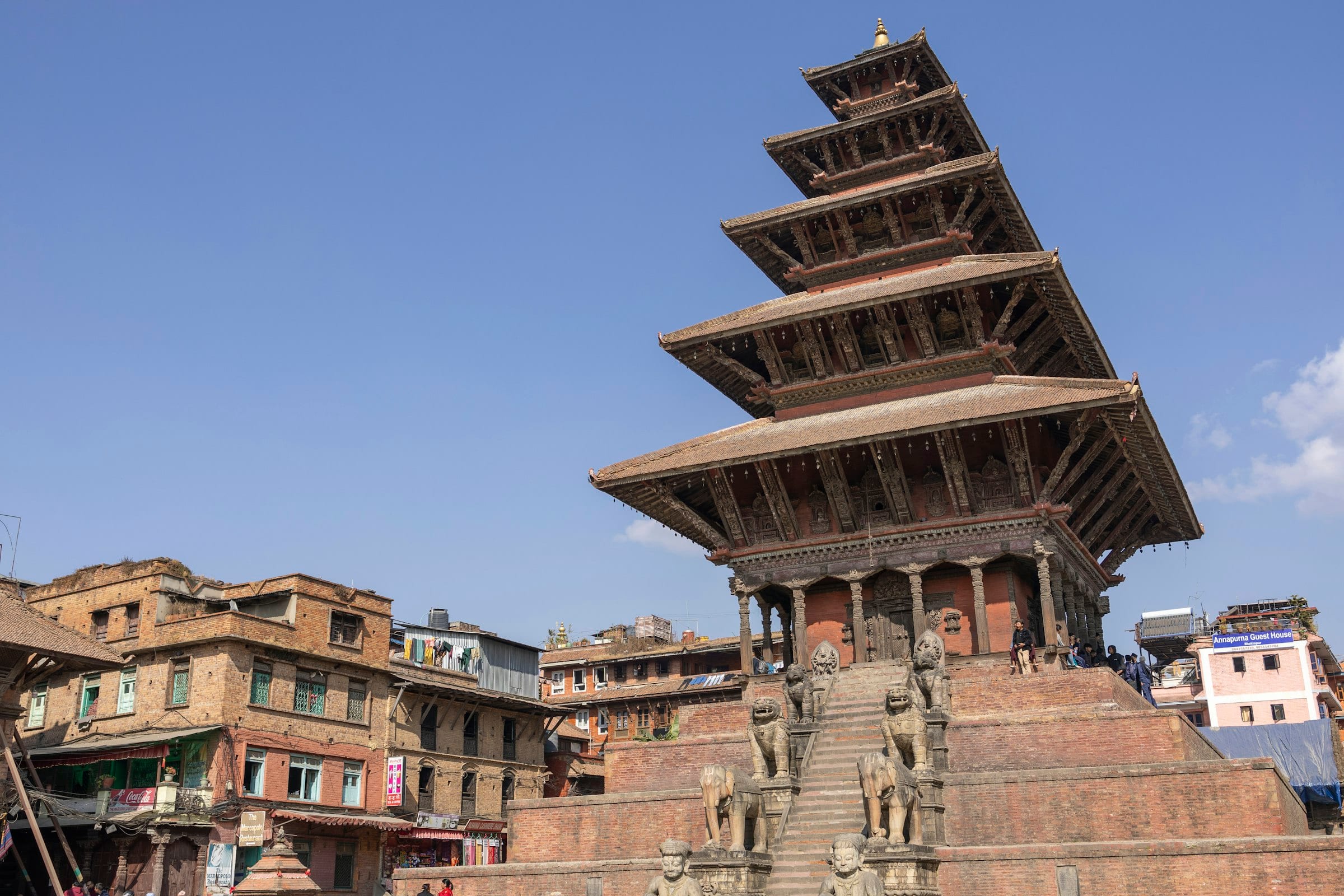
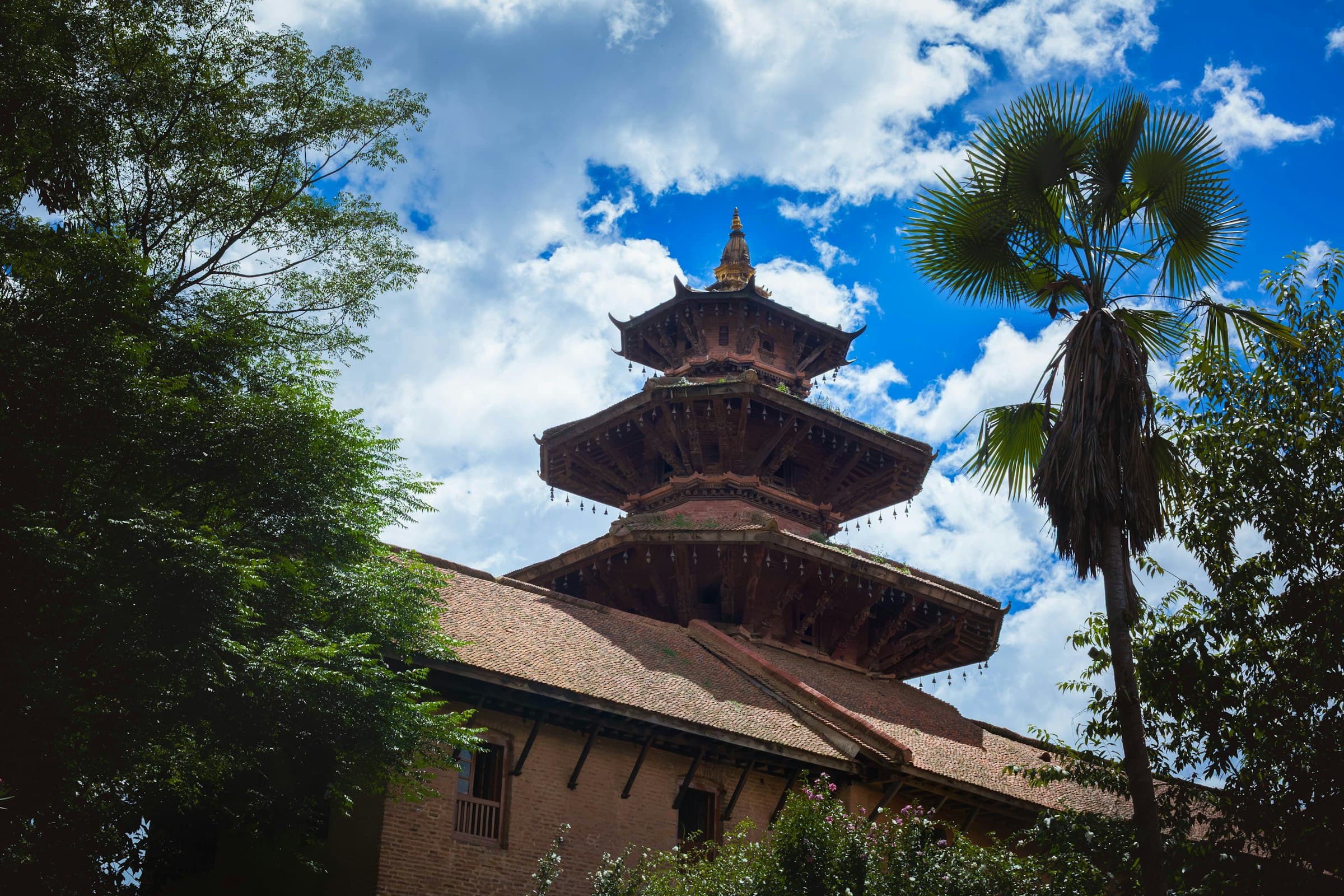
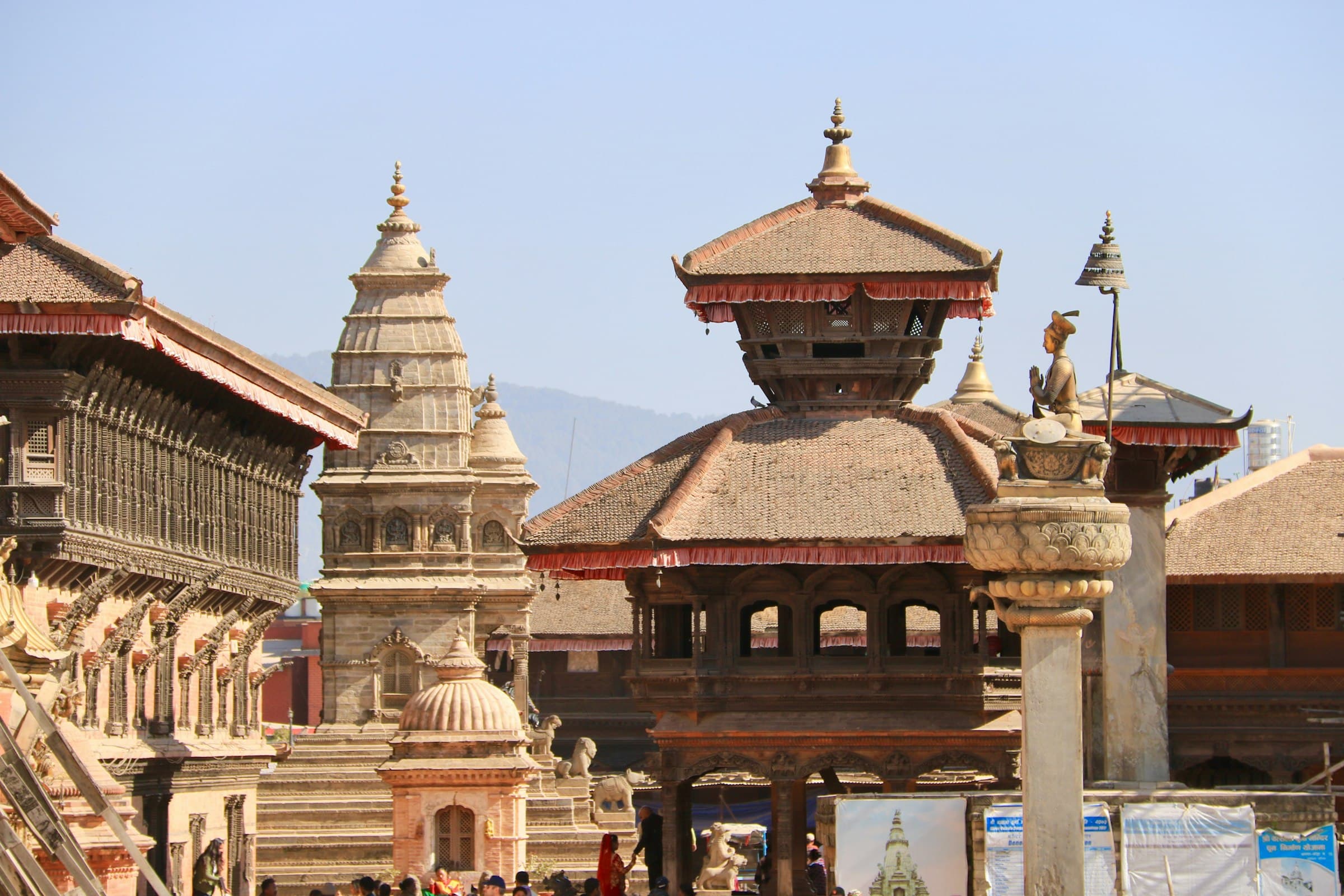
A whole medieval city rather than a square: cars are kept outside the walls, and the brick and timber run unbroken between four connected plazas. The Golden Gate and the fifty-five-window palace are on Durbar Square; the five-tiered Nyatapola, the tallest temple in Nepal, stands on Taumadhi on a stair of stone guardians and came through both the 1934 and 2015 earthquakes upright. Potters' Square is still a working yard, not a demonstration.
The entry fee here is the valley's steepest and funds the restoration; your ticket is multi-day if you want to go back.
Kathmandu · Buddhist and Hindu
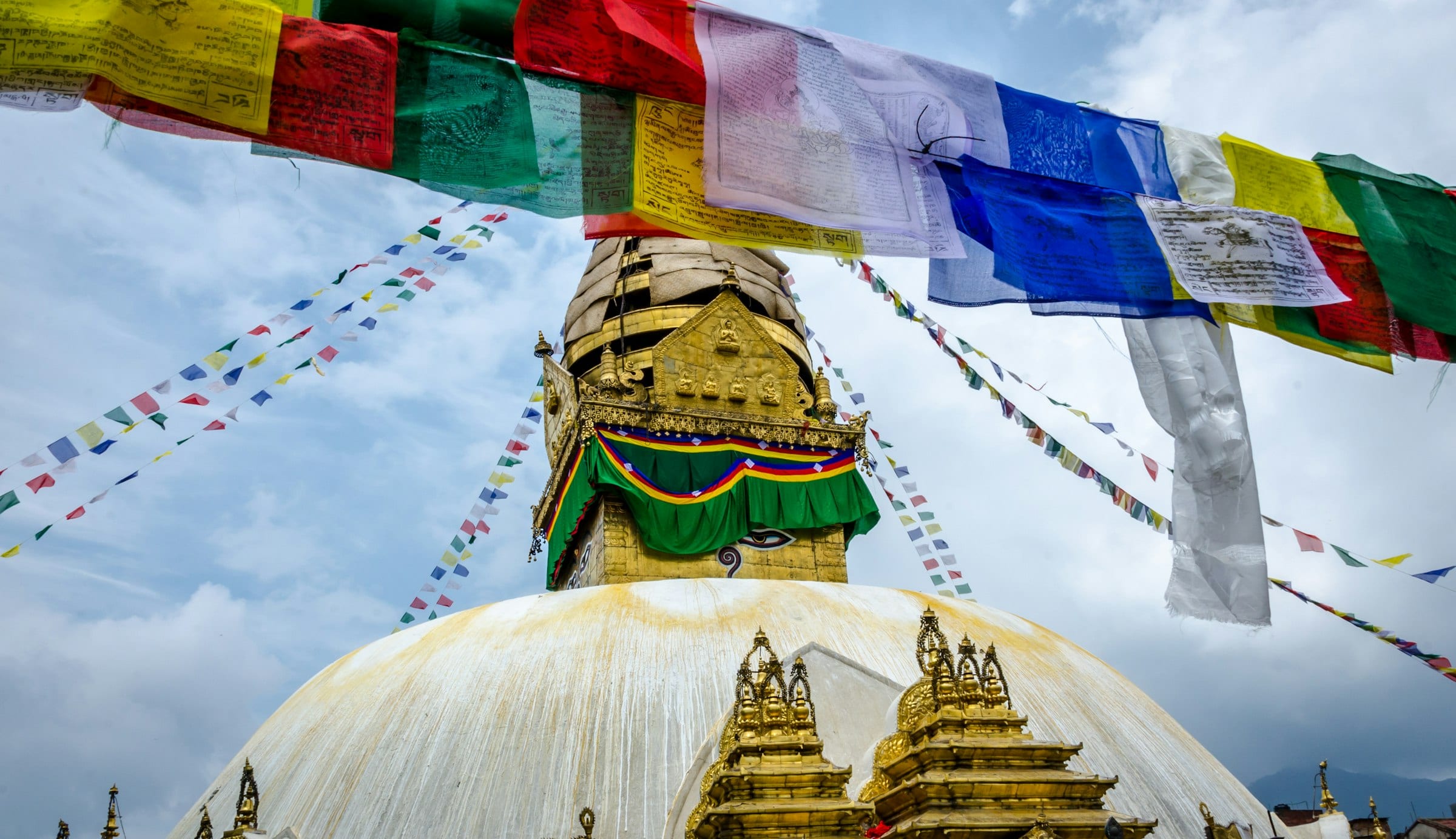
Swayambhunath
Inscribed 1979 · stupa from the 5th century
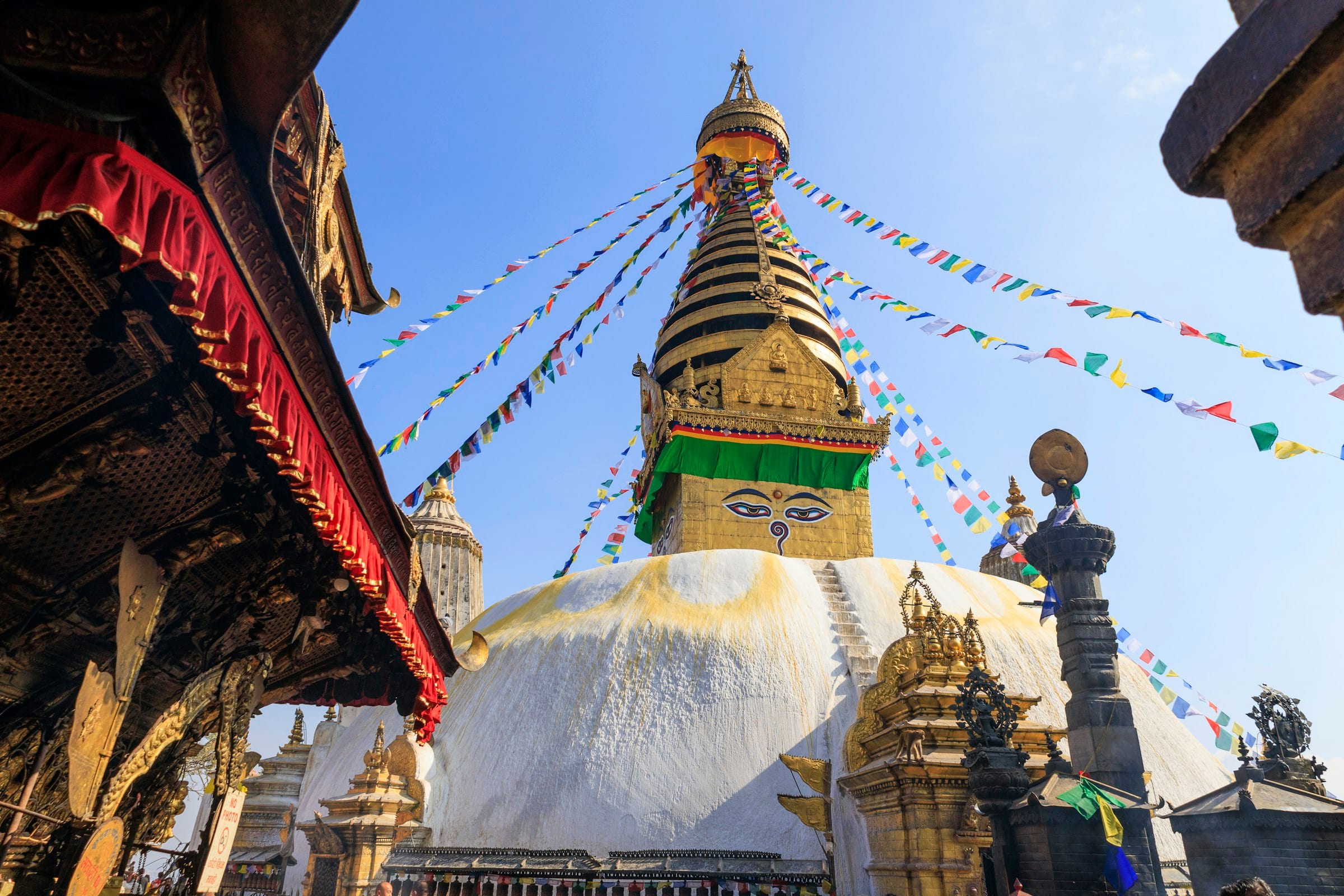
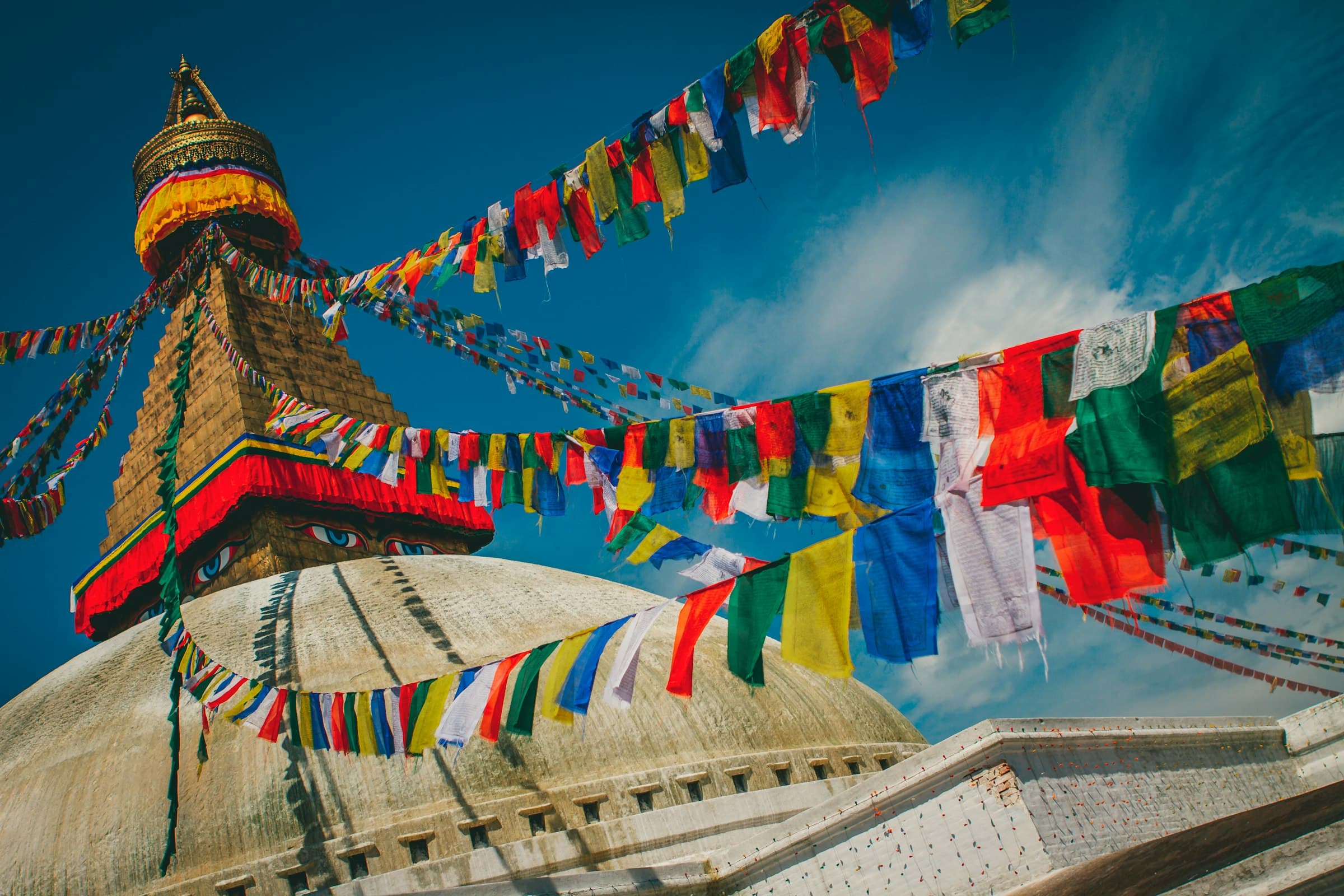
A hemispherical stupa on a hill west of the city, with the Buddha's eyes painted on all four sides of its gilded cube and the whole valley laid out beneath it. It is sacred to Buddhists and to Hindus, which is the ordinary condition of religion in this valley rather than an exception. The rhesus macaques that gave it its tourist nickname live in the wood on the east side and are entirely unbothered by you.
365 stone steps up the east stair, steep at the top; a road runs to the west gate if stairs are a problem.
Kathmandu · Tibetan Buddhist
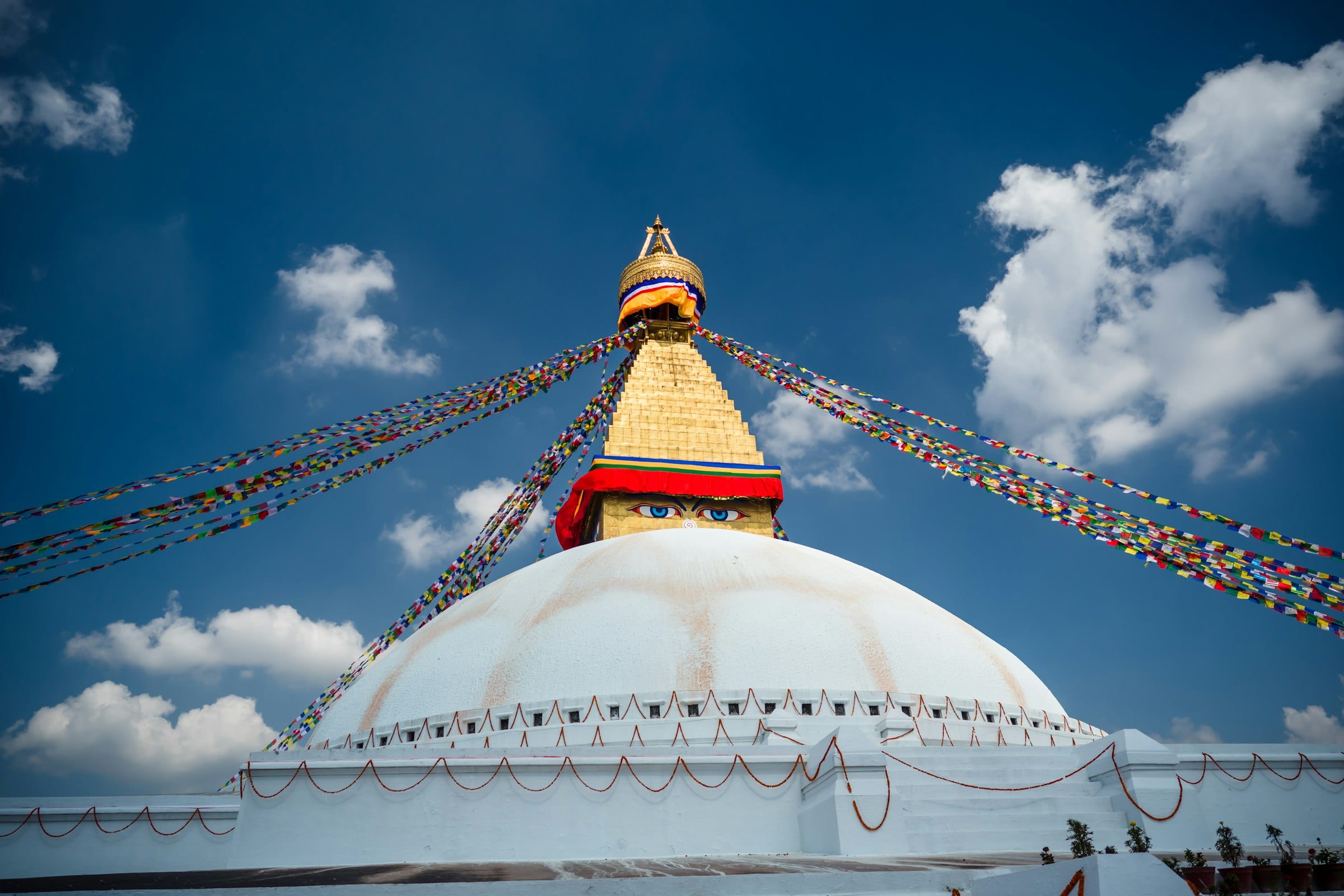
Boudhanath
Inscribed 1979 · rebuilt after 2015
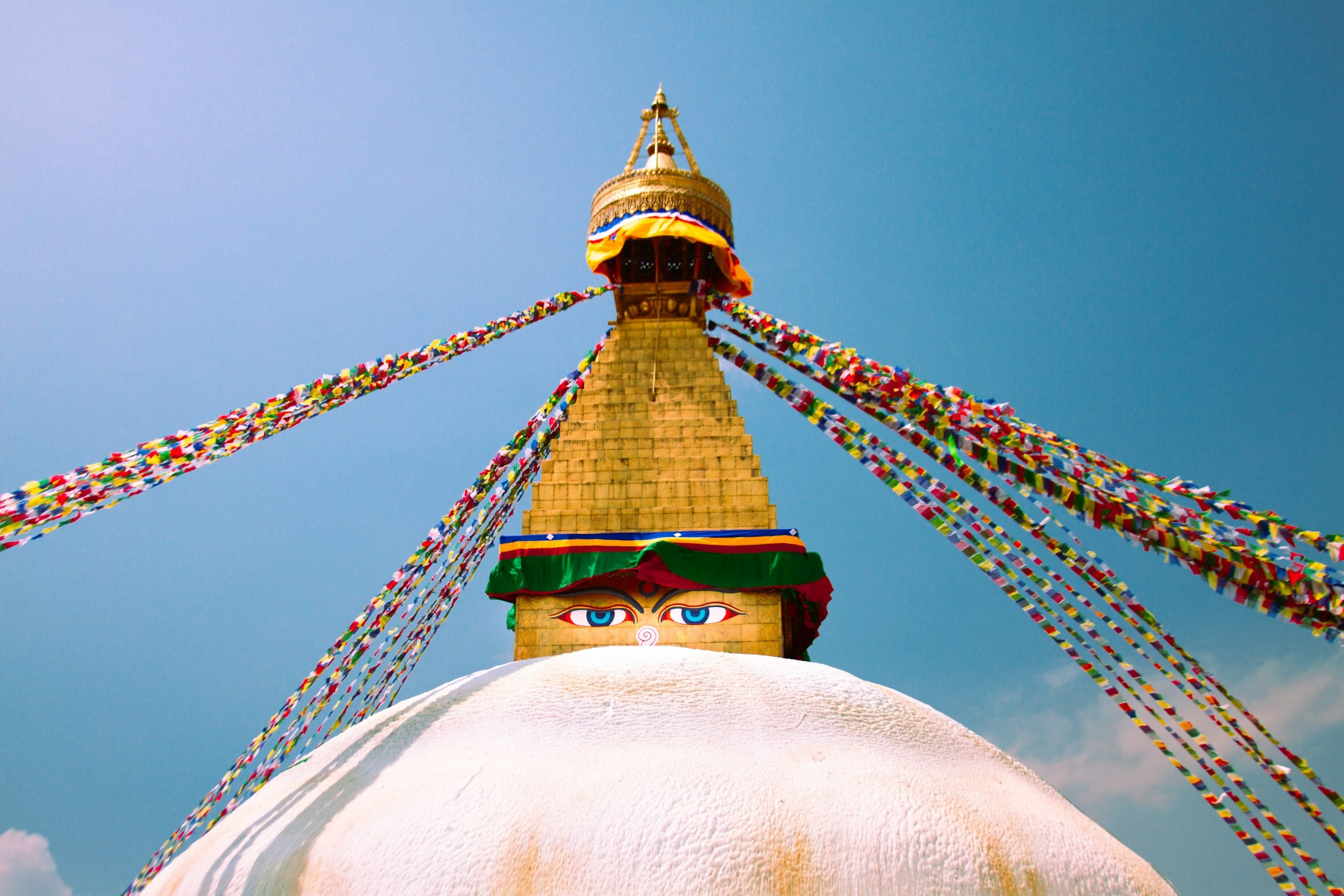
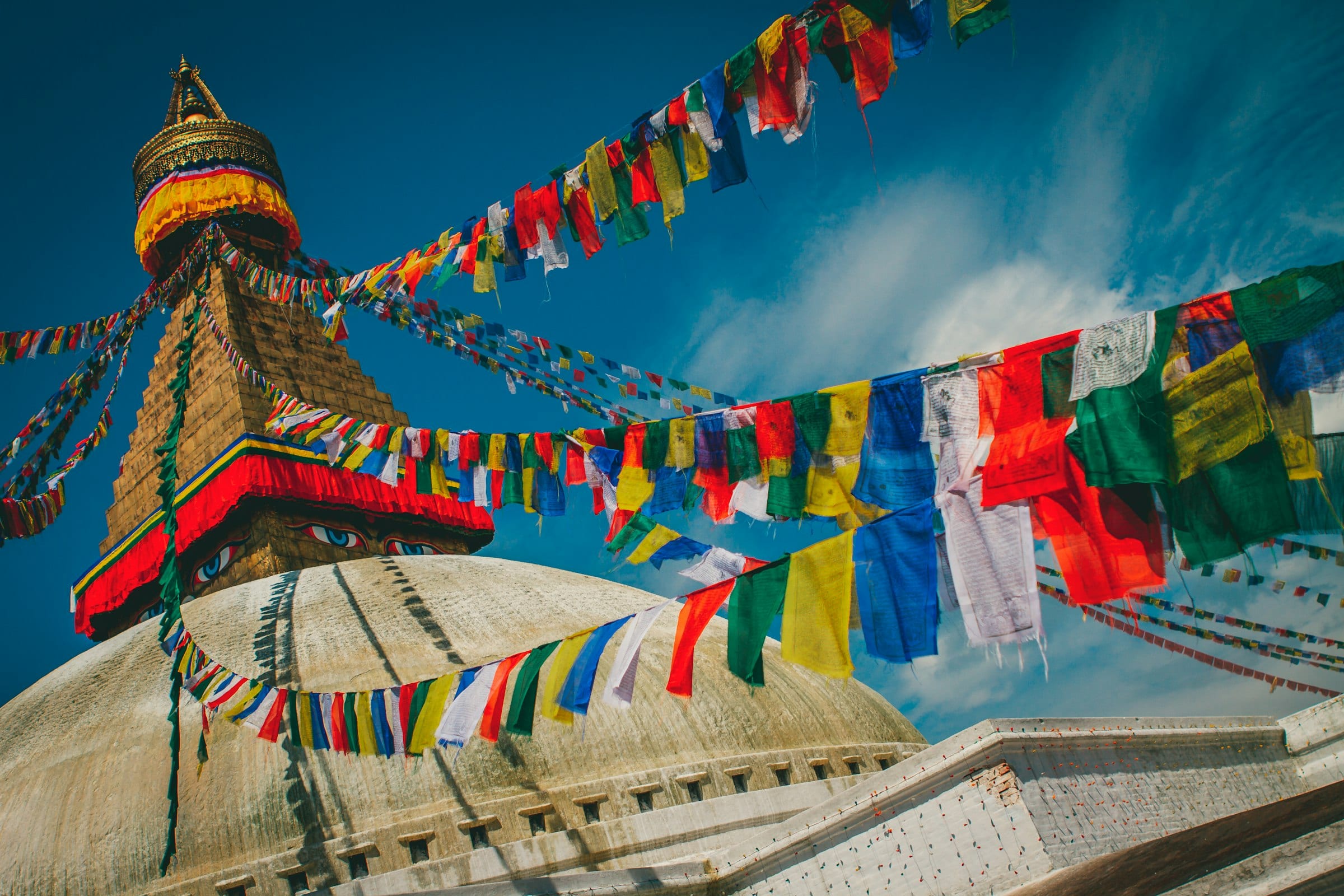
One of the largest stupas in the world and the centre of Tibetan life in Nepal, ringed by more than fifty monasteries built by the communities that settled here after 1959. The mandala of the base is best understood from a rooftop; the stupa itself is best understood at dusk, when the quarter walks the kora clockwise around it in a slow continuous crowd and the butter lamps go up in the alcoves.
Walk clockwise, as everyone else is. We time the visit for the evening kora rather than the midday coach hour.
Kathmandu · Hindu
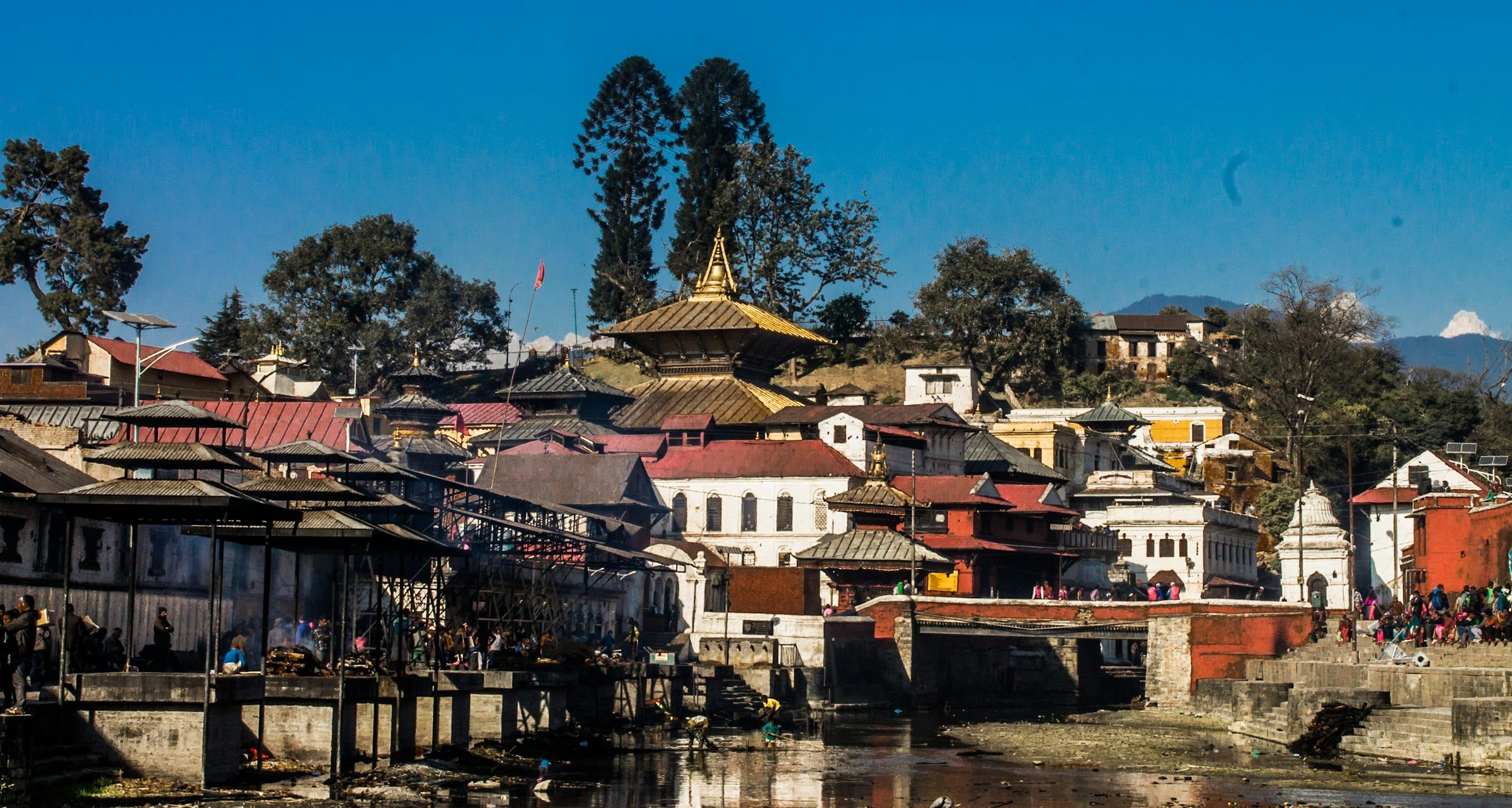
Pashupatinath
Inscribed 1979 · shrine recorded from the 5th century
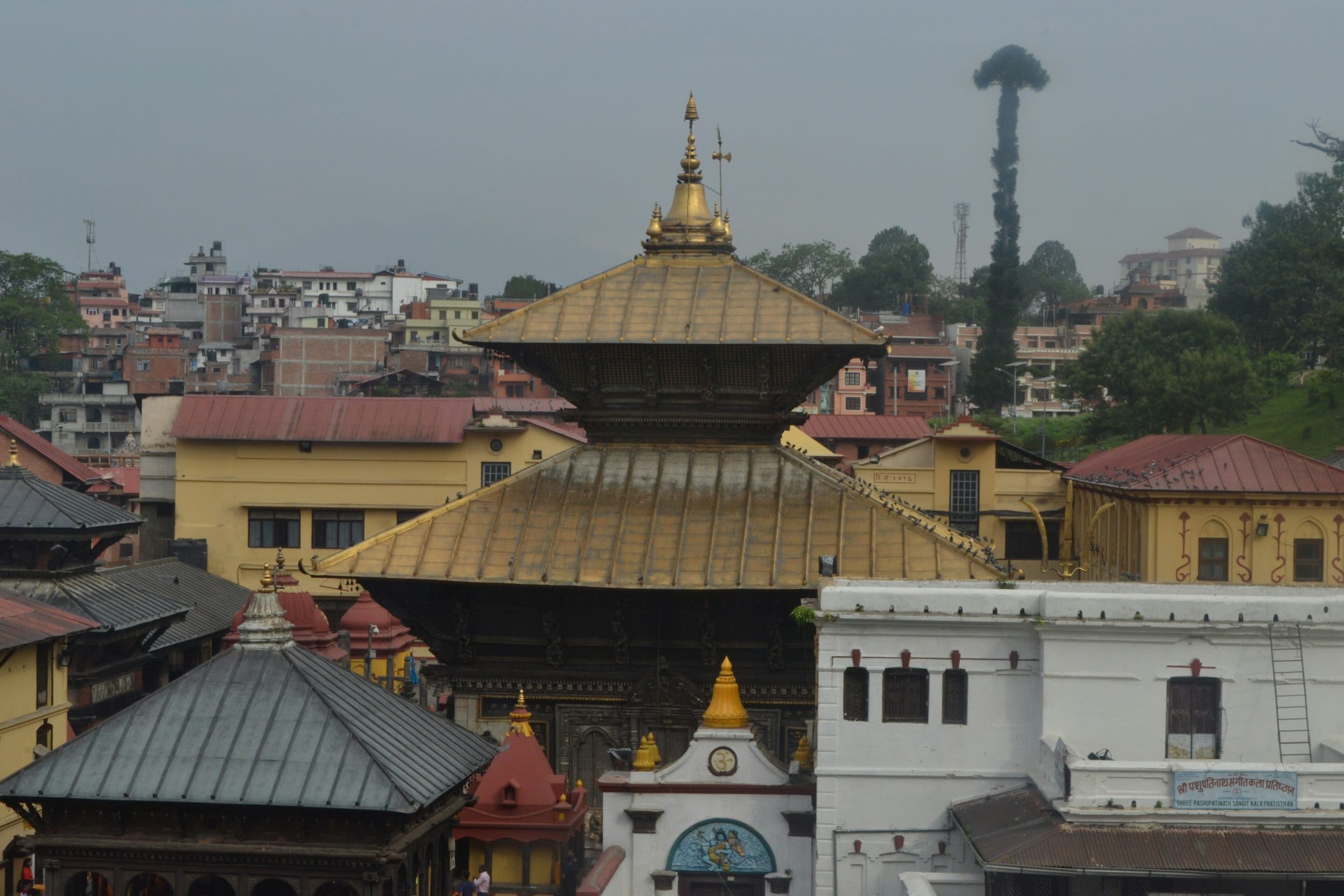
The holiest Hindu shrine in Nepal, dedicated to Shiva as lord of the animals, and a complex rather than a building: over five hundred temples, ashrams and lingams spread along both banks of the Bagmati, with a deer park behind. Open-air cremations take place on the ghats through the day. Sadhus in ochre sit on the terraces above them. At 6 pm the lamps of the Bagmati aarati go up on the west bank and the whole river turns towards it.
Only Hindus may enter the main temple; the east bank sees more anyway. Photograph the cremations from across the river or not at all.
Bhaktapur · Hindu
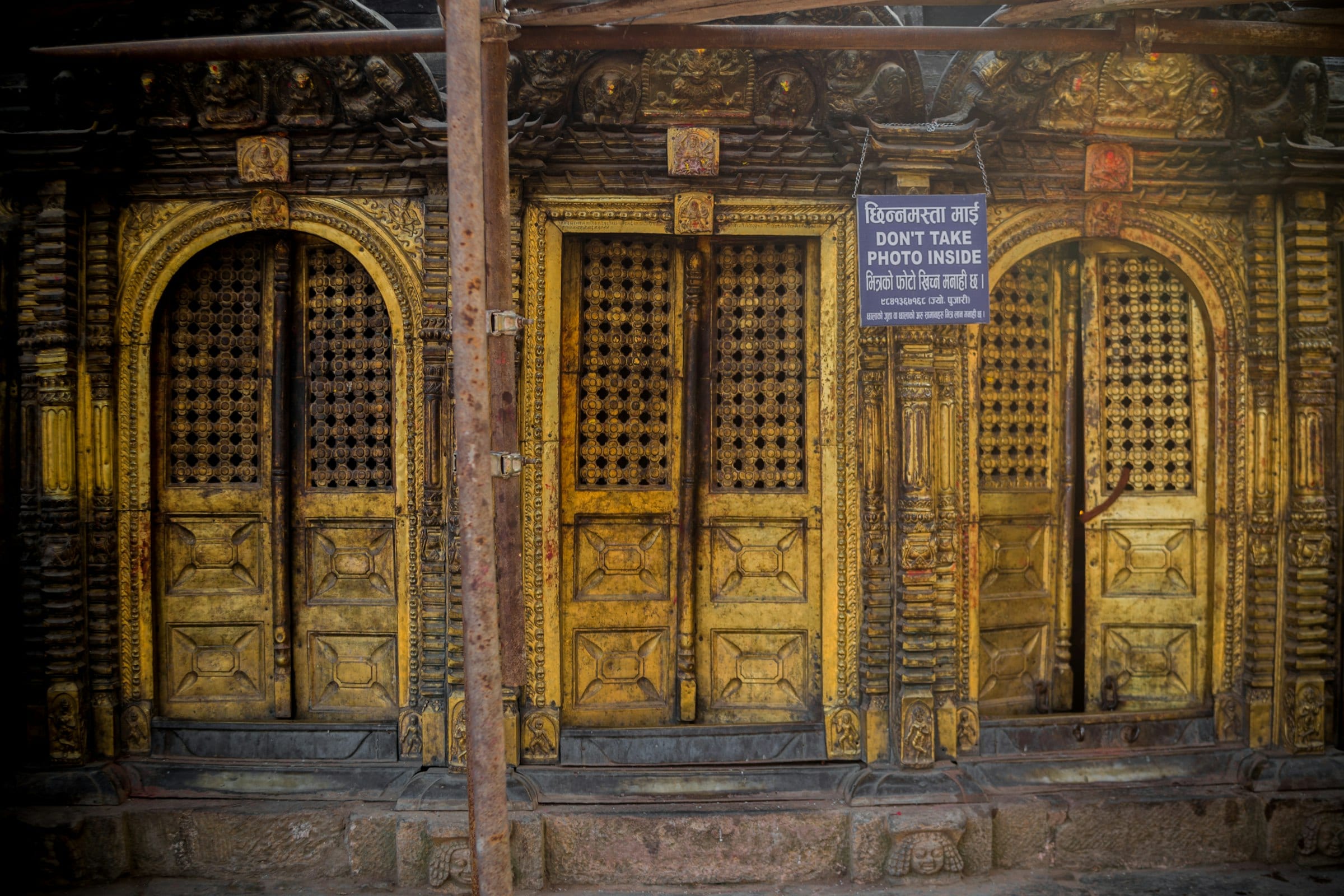
Changu Narayan
Inscribed 1979 · inscription dated 464 AD
The oldest temple still standing in Nepal, on a ridge above Bhaktapur, and the quietest of the seven by a distance — most day tours cannot fit it in, which is the whole argument for a week. It is dedicated to Vishnu, and the stone in its courtyard bearing a Licchavi inscription of 464 AD is the earliest dated record in the country. The struts and the tympanum over the gilded door are the finest Newar woodcarving on the itinerary.
A short walk up from the road, and the natural stop on the way down from Nagarkot rather than a detour.
The itinerary in detail
Download PDFEvery day carries the hours you spend on your feet, the driving between stops, the meals we serve and where you sleep. Open a day to read it in full.
Kathmandu Valley Heritage Tour: day by day
7 days
Day 1Arrive in KathmanduKathmanduNo sightseeing
Someone from our office meets you inside the arrivals hall at Tribhuvan International with a marigold garland and your name on a board, and drives you the twenty minutes into Thamel. The rest of the day is yours. At 4 pm we run the briefing over tea: which square you are in on which morning, what to wear inside the temple courtyards, where photography is welcome and where it is not, and how much cash to carry for the days you are on your own. Dinner is in a Newari courtyard restaurant a few streets from the hotel.
- Private airport pick-up, at any arrival hour
- 4 pm briefing over tea, with the week laid out square by square
- Welcome dinner: a samay baji platter and a chhoyla, in a Newari courtyard
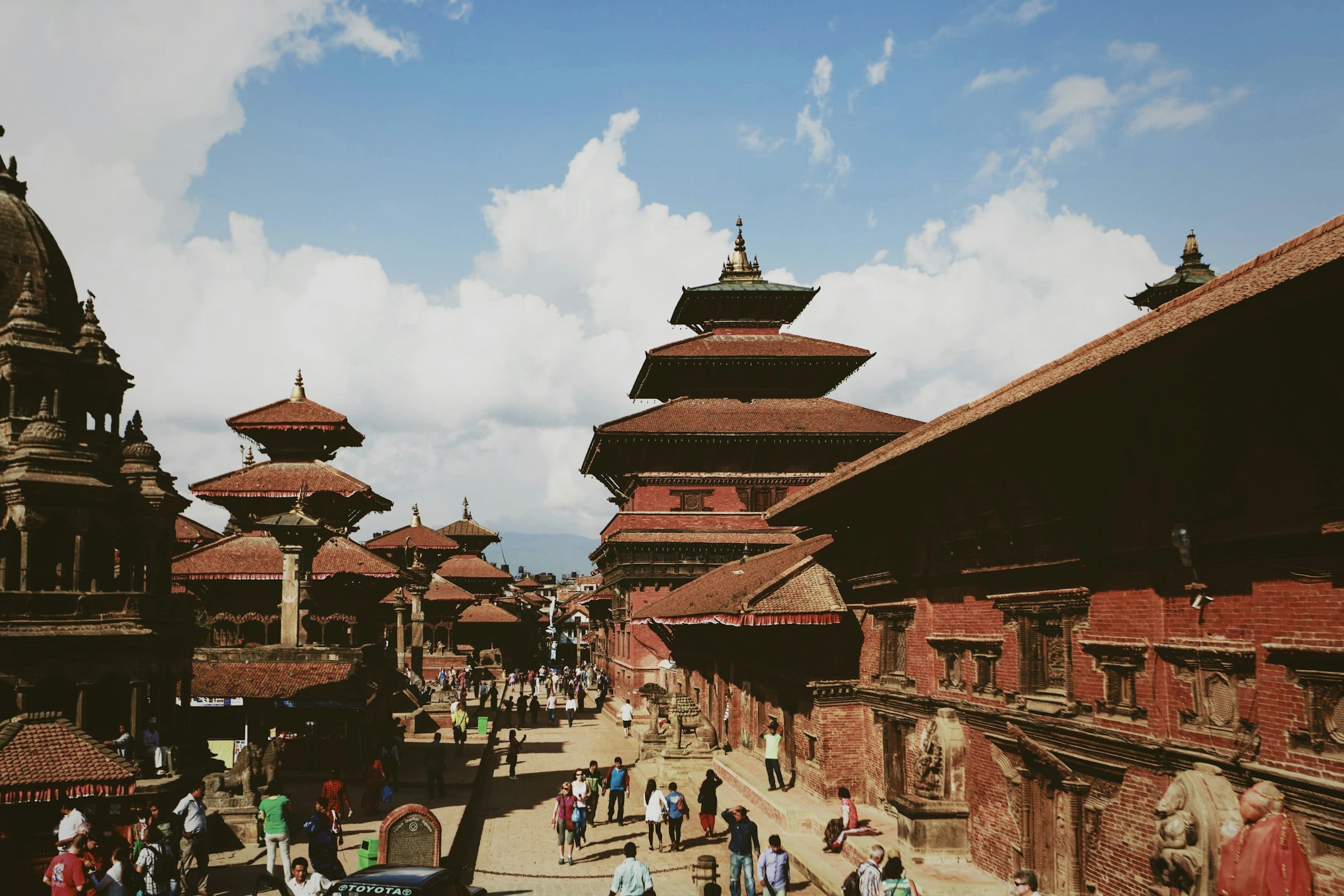 Time at the sitesNo sightseeingBased inKathmanduDistanceAirport transferMealsBBreakfast not includedLLunch not includedDDinner includedHotelHeritage hotel in Thamel, twin share
Day 2Kathmandu Durbar Square and SwayambhunathKathmandu5–6 hrs
We walk to Durbar Square rather than drive: it is fifteen minutes from the hotel through the bazaar, and the approach is half of what the square is. Inside are the Hanuman Dhoka palace, the Taleju temple, the erotic struts of Jaganath, and the Kumari Ghar, where the living goddess appears at a first-floor window when she chooses to. Your guide will show you the 2015 earthquake damage and what has been rebuilt since, which is most of it. After lunch we drive across the Vishnumati to Swayambhunath and climb the 365 stone steps through the rhesus macaques the hill is nicknamed for. The stupa is 1,500 years old and the valley is laid out below it, which is the best possible orientation on your first full day.
- Kumari Ghar, Hanuman Dhoka and the Kasthamandap, rebuilt in its original timber
- The 365-step east stair at Swayambhunath, or the road to the west gate if you would rather
- Both entry fees paid in advance: no queuing at the ticket window
- Evening free in Thamel, ten minutes from the hotel on foot
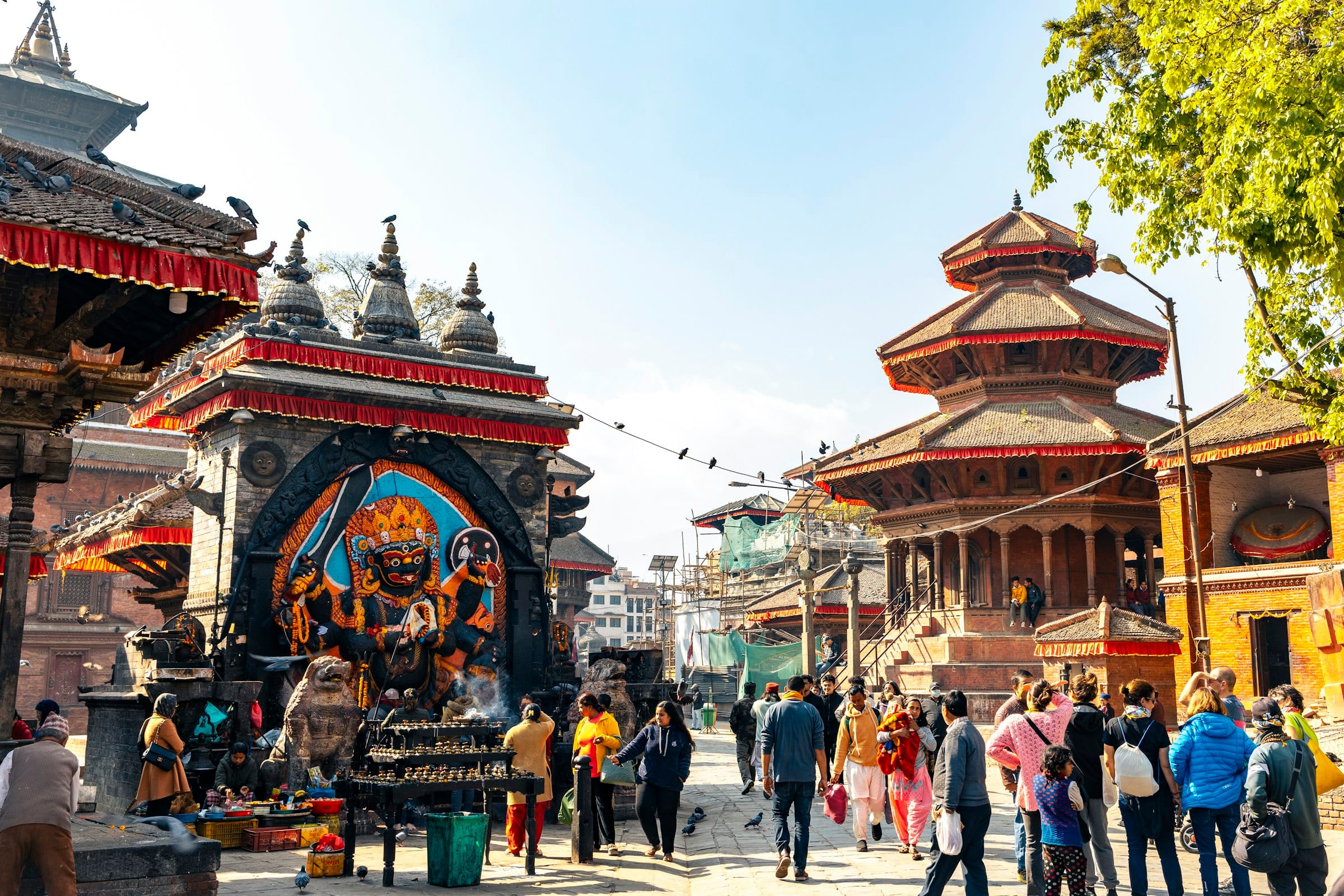 Time at the sites5–6 hrsBased inKathmanduDistance9 km by roadMealsBBreakfast includedLLunch includedDDinner not includedHotelHeritage hotel in Thamel, twin share
Day 3Patan, and the craftsmen south of the riverKathmandu6 hrs
Lalitpur means city of beauty and it earns it. The Durbar Square here is the densest of the three, and it is entirely pedestrian: the Krishna Mandir carved from a single quarry of stone in 1637, twenty-one gilt pinnacles above it, and the three palace courtyards behind — Sundari Chowk with the sunken royal bath at its centre, Mul Chowk, and Keshav Narayan Chowk, which is now the Patan Museum and the finest small museum in South Asia. We give it an unhurried morning, then walk five minutes to the Golden Temple, a working Buddhist monastery a family has looked after in shifts since the twelfth century. The afternoon leaves the tourist map: Bungamati and Khokana, two Newar villages where the woodcarvers still work to order and the mustard-oil press is turned by hand.
- Patan Museum entry included, and worth the hour it takes
- The Golden Temple, still run by a rotating family priesthood
- Lunch in a rooftop courtyard over the square, not in a hotel dining room
- Bungamati and Khokana: woodcarvers, and the mustard-oil press
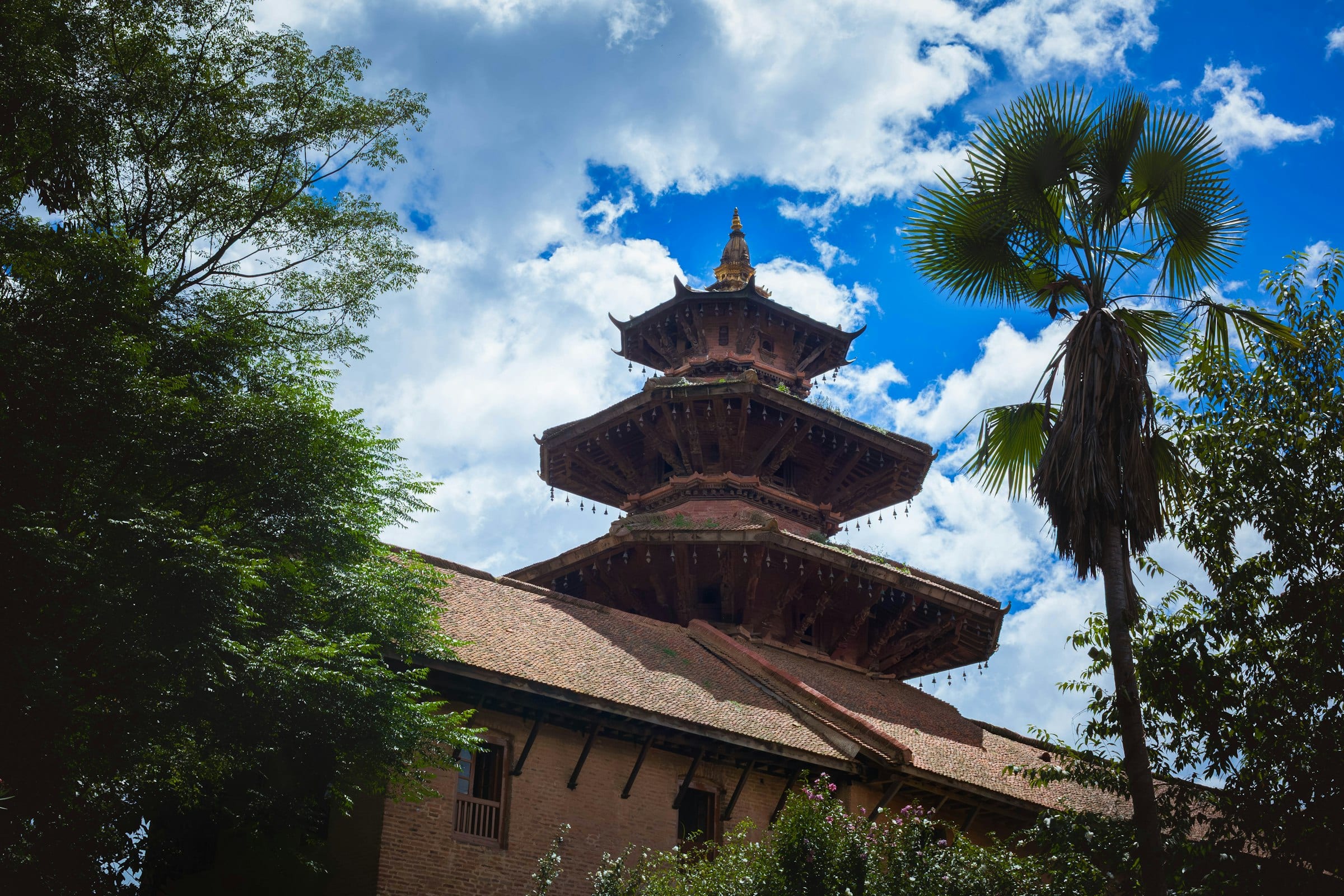 Time at the sites6 hrsBased inKathmanduDistance22 km by roadMealsBBreakfast includedLLunch includedDDinner not includedHotelHeritage hotel in Thamel, twin share
Day 4Bhaktapur and Changu Narayan, up to NagarkotNagarkot6 hrs
Bhaktapur is the one people wish they had given two days to. Cars are kept out, the brick is unbroken street after street, and the four squares run into one another: Durbar Square with the Golden Gate and the fifty-five-window palace, Taumadhi with the five-tiered Nyatapola standing on its stair of guardians, Dattatreya with the peacock window, and Potters' Square, where the wheels are still turning and the drying rows change every morning. We eat there, and you should have the juju dhau — king curd, set in clay. Mid-afternoon we climb to Changu Narayan on its ridge, the oldest standing temple in the country, and then keep climbing to Nagarkot for the last hour of light along the Himalayan skyline.
- Bhaktapur is pedestrian throughout: the whole day here is on foot
- Nyatapola, the tallest temple in Nepal, which stood through 1934 and 2015
- Changu Narayan and its Licchavi stone inscription, dated 464 AD
- Sunset from the Nagarkot ridge, then dinner at the hotel
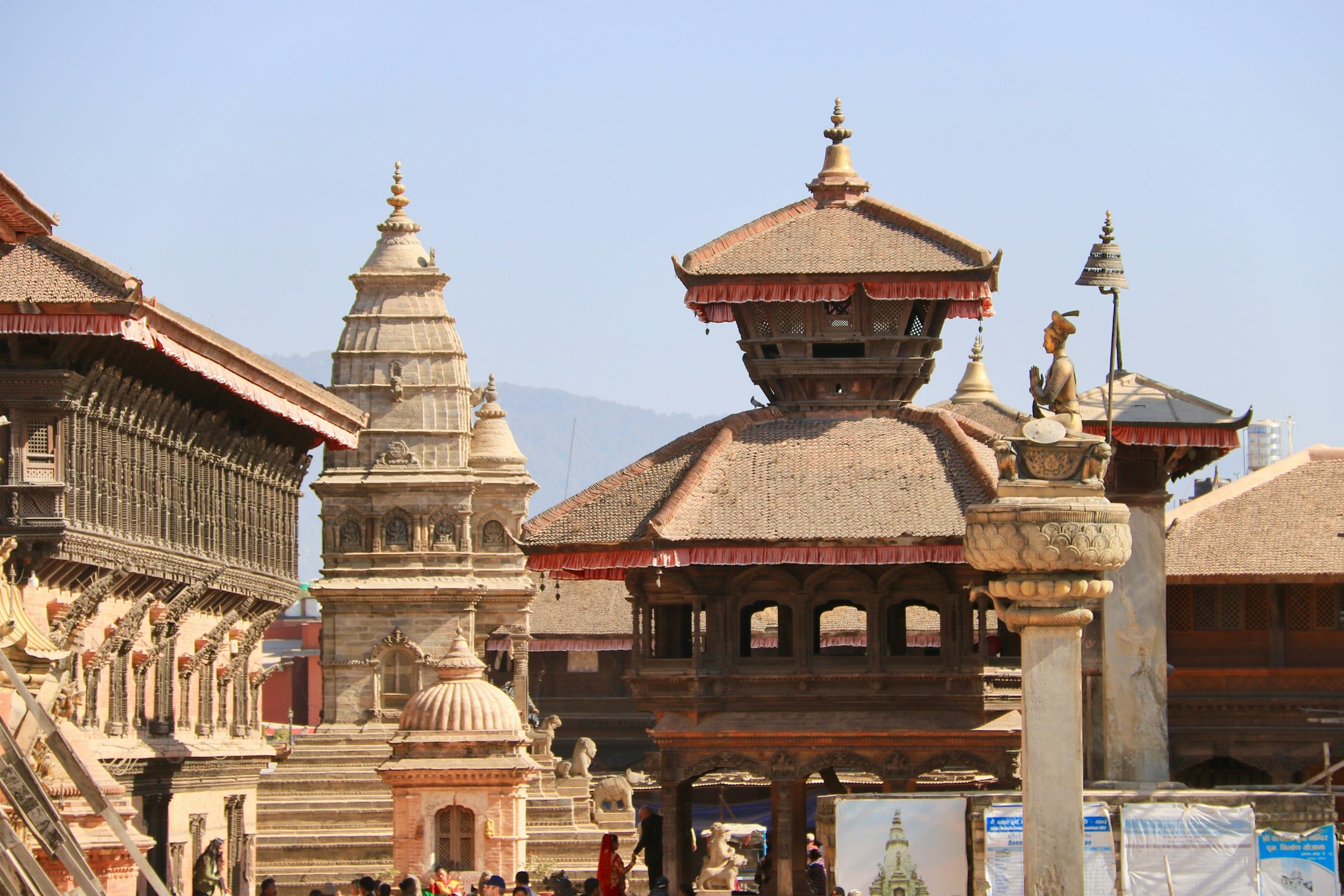 Time at the sites6 hrsBased inNagarkotDistance45 km by roadMealsBBreakfast includedLLunch includedDDinner includedHotelRidge hotel at Nagarkot, twin share, Himalaya-facing
Day 5Sunrise at Nagarkot, evening kora at BoudhanathKathmandu4–5 hrs
We wake you before six. From the ridge the range comes up in order — Ganesh Himal, Langtang Lirung, Dorje Lakpa, Gauri Shankar — and on a hard, clear winter morning Everest is there on the far right, small and unmistakable. Breakfast afterwards, then the drive down through terraces and brick kilns into the city, arriving at Boudhanath in the early afternoon while it is still quiet. The best of it comes later: at dusk the whole quarter walks the kora clockwise around the stupa, monks and Tibetan families and shopkeepers, butter lamps going up in the alcoves, and you walk it with them. We stay for it rather than photographing it from a café roof and leaving.
- Pre-dawn call for the sunrise; the hotel opens the kitchen early
- Everest is visible from Nagarkot on perhaps one clear morning in four
- Boudhanath: the largest stupa in Nepal and the heart of its Tibetan community
- We stay through dusk for the kora and the butter lamps
 Time at the sites4–5 hrsBased inKathmanduDistance38 km by roadMealsBBreakfast includedLLunch includedDDinner not includedHotelHeritage hotel in Thamel, twin share
Day 6Kirtipur and Chobar, then Pashupatinath at aaratiKathmandu6 hrs
A morning on the hill town of Kirtipur, which almost no tour goes to: Bagh Bhairab with its offering of captured weapons, streets of Newar houses that are lived in rather than restored, and the valley from the south for once. Then Chobar, where the Bagmati cuts its gorge, and the Adinath temple hung with the cooking pots newlyweds leave there. We are at Pashupatinath by mid-afternoon, Nepal's holiest Hindu shrine, with over five hundred temples and lingams inside the complex. Non-Hindus do not enter the main temple, and the east bank is the better side anyway: the ghats, the sadhus, the deer park behind, and at 6 pm the Bagmati aarati, when the lamps go up on the river. Farewell dinner back in town.
- Kirtipur and Chobar: two stops most valley tours leave out
- Cremations take place on the ghats; we watch from the far bank, quietly and at distance
- The 6 pm Bagmati aarati, and the deer park behind the complex
- Farewell dinner with a Newari dance performance, and your trip certificate
 Time at the sites6 hrsBased inKathmanduDistance28 km by roadMealsBBreakfast includedLLunch includedDDinner includedHotelHeritage hotel in Thamel, twin share
Day 7Depart KathmanduKathmanduNo sightseeing
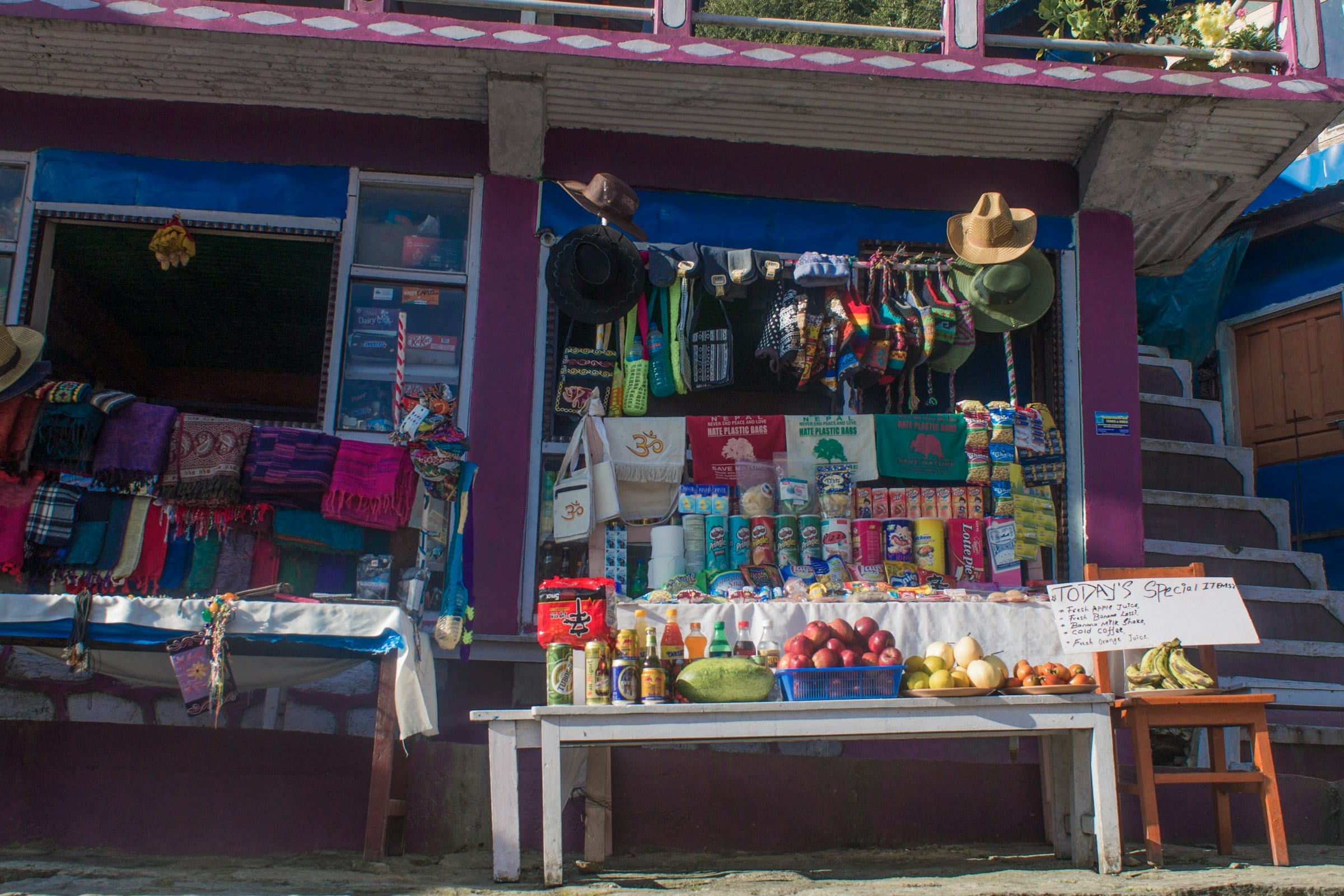
Breakfast at the hotel and a private transfer to the airport three hours before your flight. If you are going on to a trek, to Chitwan or to Pokhara, this is where we hand you over — same office, same paperwork, no second booking to make. And if your flight is in the evening we will hold the room until noon and put the morning to use: Asan and Indra Chowk for the spice market, Thamel for the last of the shopping, or the Garden of Dreams if you have had enough of crowds.
- Late check-out held to noon wherever the hotel allows it
- Private airport transfer, timed to your flight
- Onward treks, Chitwan and Pokhara arranged on the same booking
 Time at the sitesNo sightseeingBased inKathmanduDistanceAirport transferMealsBBreakfast includedLLunch not includedDDinner not includedHotelNo overnight
Dates and prices
Group departures run from two travellers and never exceed twelve. Prices are per person on a twin-share basis and include every entrance fee, transfer and meal listed below.
DepartureAvailabilityPriceBooking
05 – 11 Oct 2026
Mon → Sun · 7 days
Not available$640
per person
19 – 25 Oct 2026
Mon → Sun · 7 days
Available4 spaces left$640
per person
02 – 08 Nov 2026
Mon → Sun · 7 days
Available$640
per person
16 – 22 Nov 2026
Mon → Sun · 7 days
Available$640
per person
07 – 13 Dec 2026
Mon → Sun · 7 days
Available$590
per person
18 – 24 Jan 2027
Mon → Sun · 7 days
Available$590
per person
15 – 21 Feb 2027
Mon → Sun · 7 days
Available6 spaces left$640
per person
15 – 21 Mar 2027
Mon → Sun · 7 days
Available$640
per person
12 – 18 Apr 2027
Mon → Sun · 7 days
Available$640
per person
None of these dates work?
We run this tour privately on any date of the year, for any party from one person upwards, and we will rebuild the week around your arrival and departure flights rather than the other way about.
Pick a start date and we will price these 7 days
What's included
The entrance fees are the line worth comparing: about NPR 12,700 a head is collected at these gates, and it is inside the price on this page.
Included
12 itemsIn the price on this page
- Private airport transfers on arrival and departure, at any hour
- 5 nights' twin-share heritage hotel in Kathmandu, with breakfast
- 1 night at a Himalaya-facing ridge hotel in Nagarkot, twin share
- 6 breakfasts, 5 lunches and 3 dinners, including welcome and farewell
- Every entrance fee on the itinerary, about NPR 12,700 a head, paid in advance
- Private vehicle throughout, sized to your party, with a driver who waits
- Government-licensed, English-speaking Newar guide from the valley
- Patan Museum entry, and the thangka school and singing-bowl demonstration
- All guide and driver wages, insurance, meals and parking
- Bottled water in the vehicle on every touring day
- Farewell dinner with a Newari dance performance, and your trip certificate
- All government taxes, VAT and our service charge
Not included
11 itemsBudget for these separately
- International flights to and from Kathmandu
- Nepal visa fee: USD 30 for 15 days, or USD 50 for 30, issued on arrival
- Travel insurance, which we ask you to hold and will not check line by line
- Lunches and dinners not listed above, and all drinks with meals
- Camera and video fees at the few monuments that charge one separately
- Personal expenses: laundry, Wi-Fi beyond the hotel's, phone calls, souvenirs
- Anything bought at the thangka school or the craft workshops we visit
- Extra nights in Kathmandu caused by a change to your own flights
- Emergency evacuation and medical treatment
- Tips for your guide and driver: customary, and entirely your call
- Anything not listed under what is included
The valley in photographs
Shot on this itinerary by our guides and the people who travelled it.
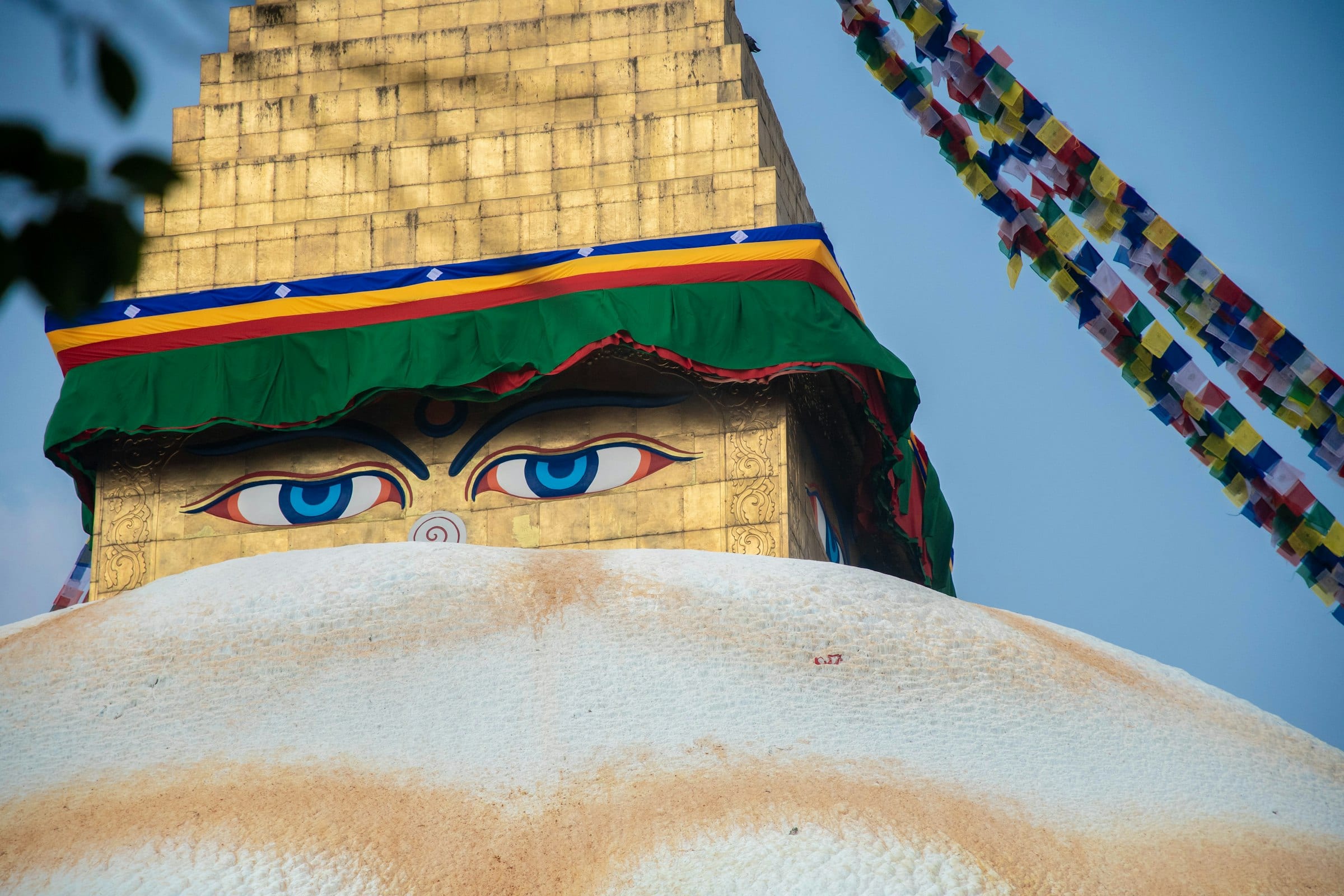 The painted eyes of the Buddha on the gilded cube of Boudhanath stupa
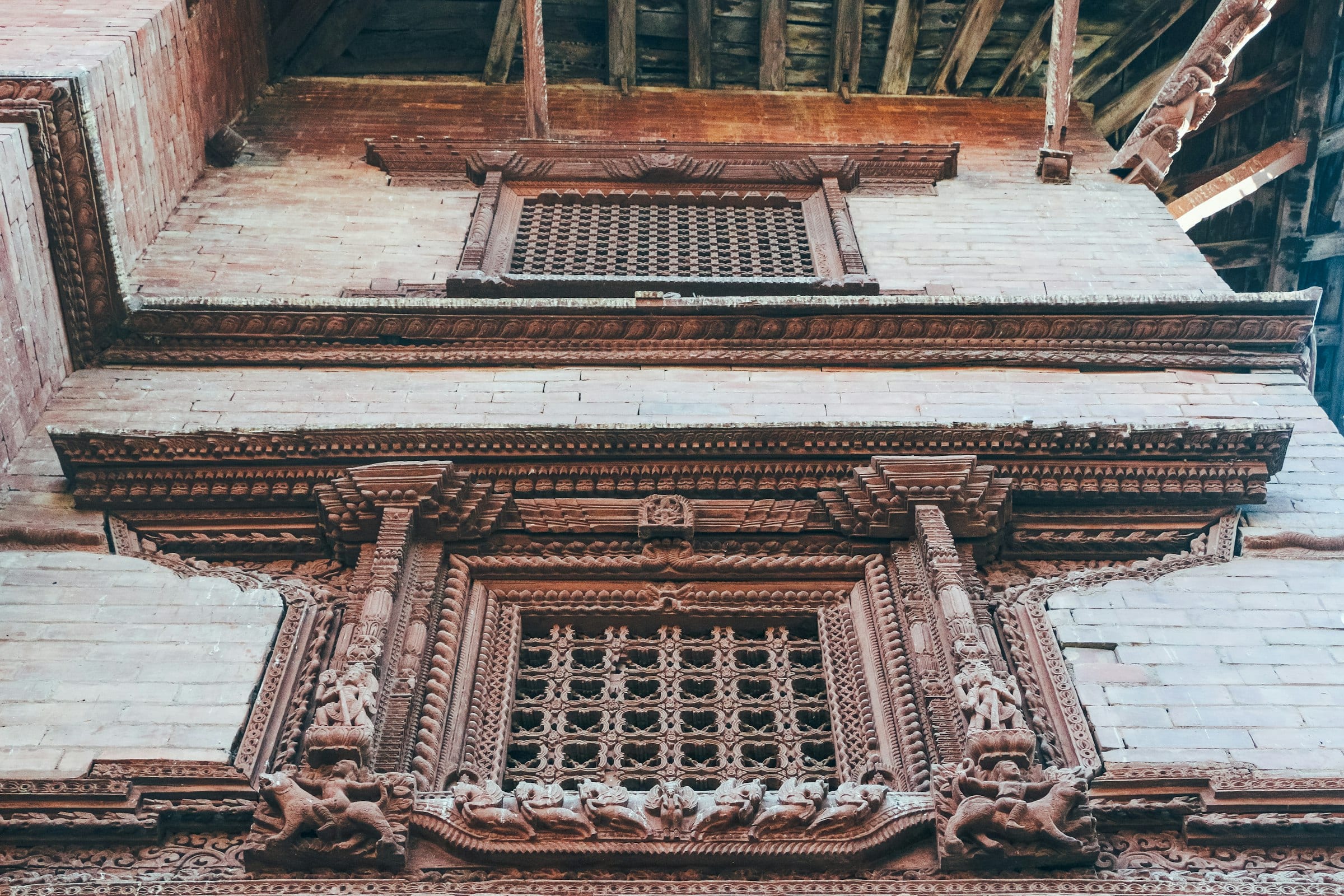 A carved timber window in a brick Newar facade
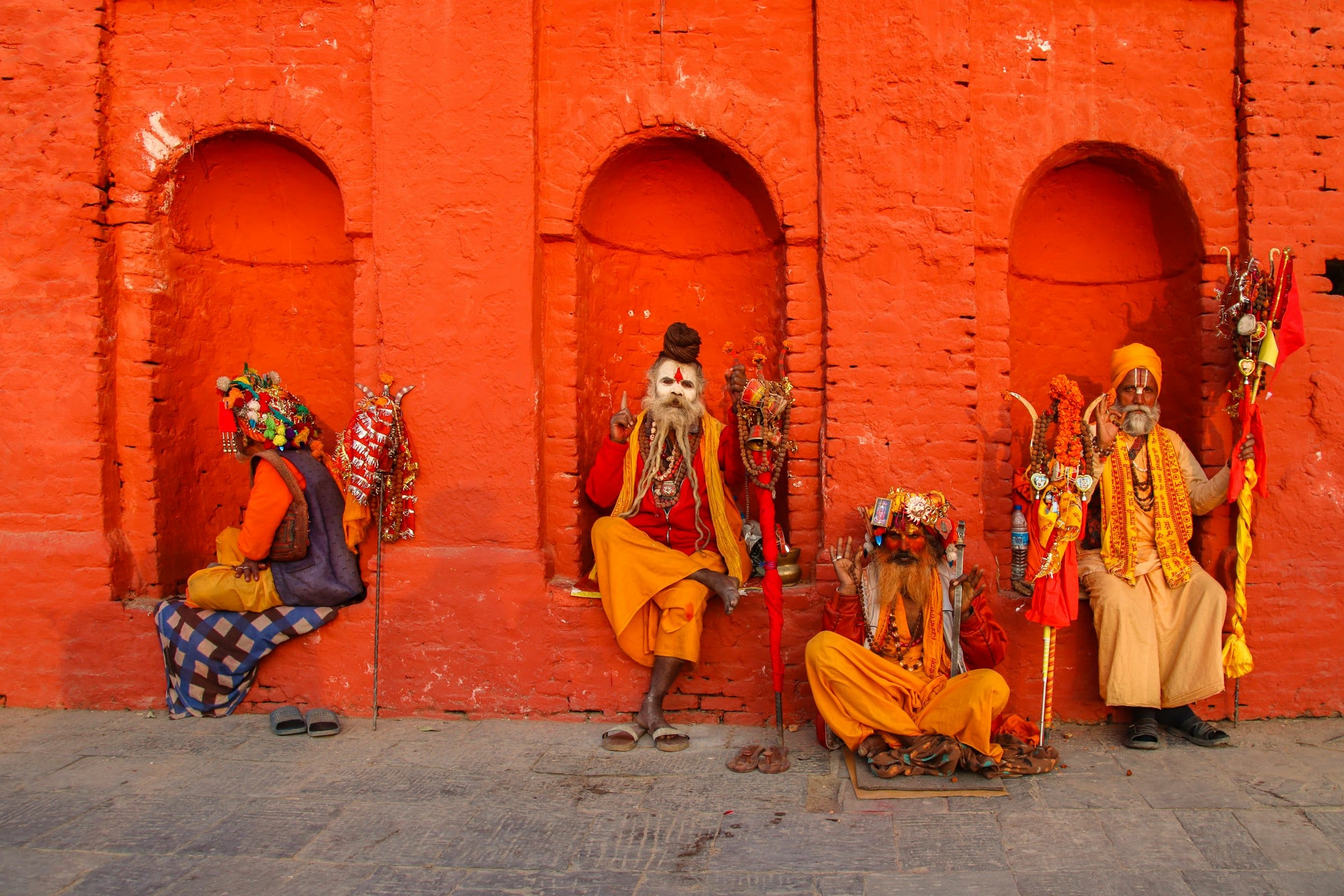 Sadhus in ochre robes seated against an orange temple wall
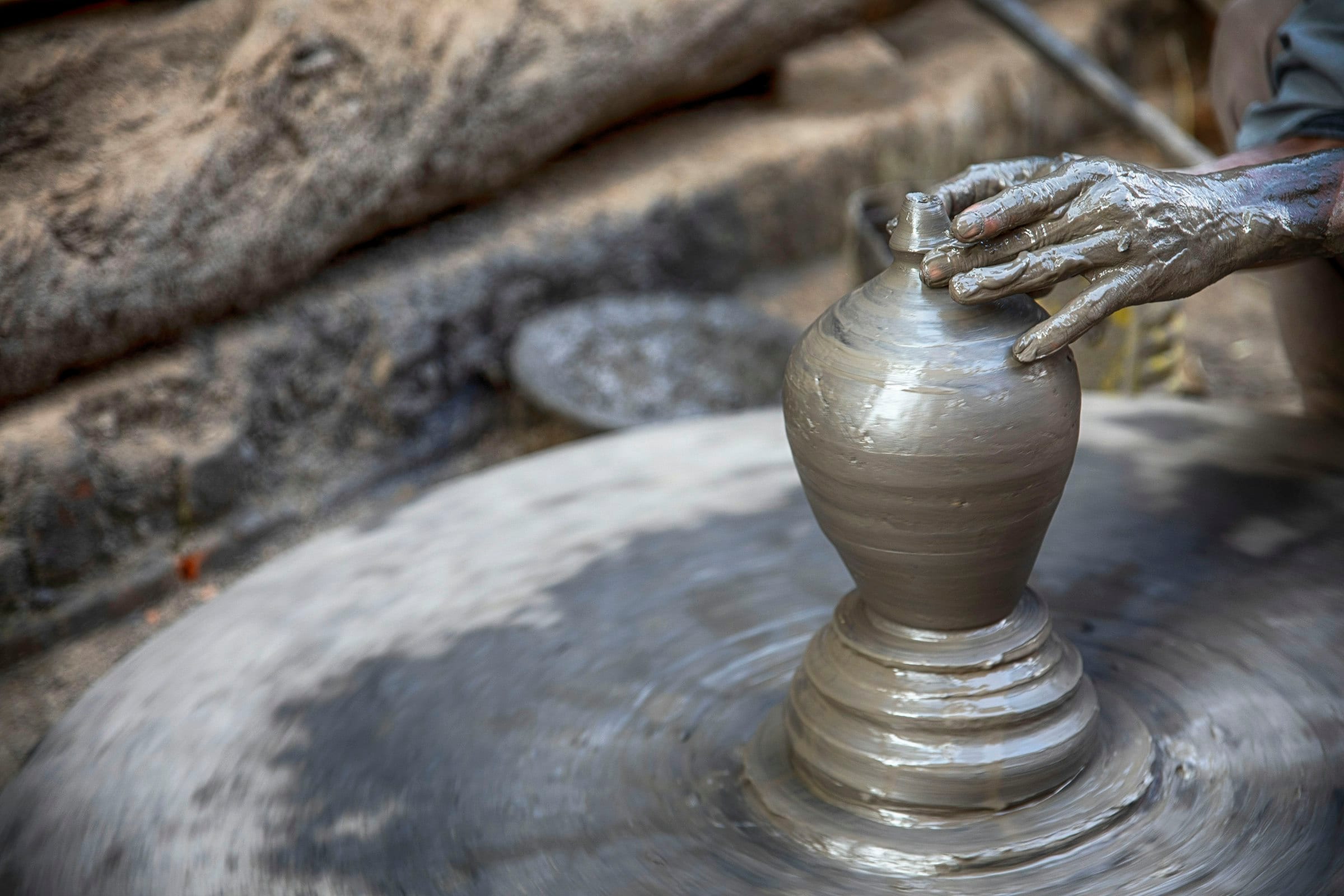 A potter turning a clay vessel on a wheel in Bhaktapur
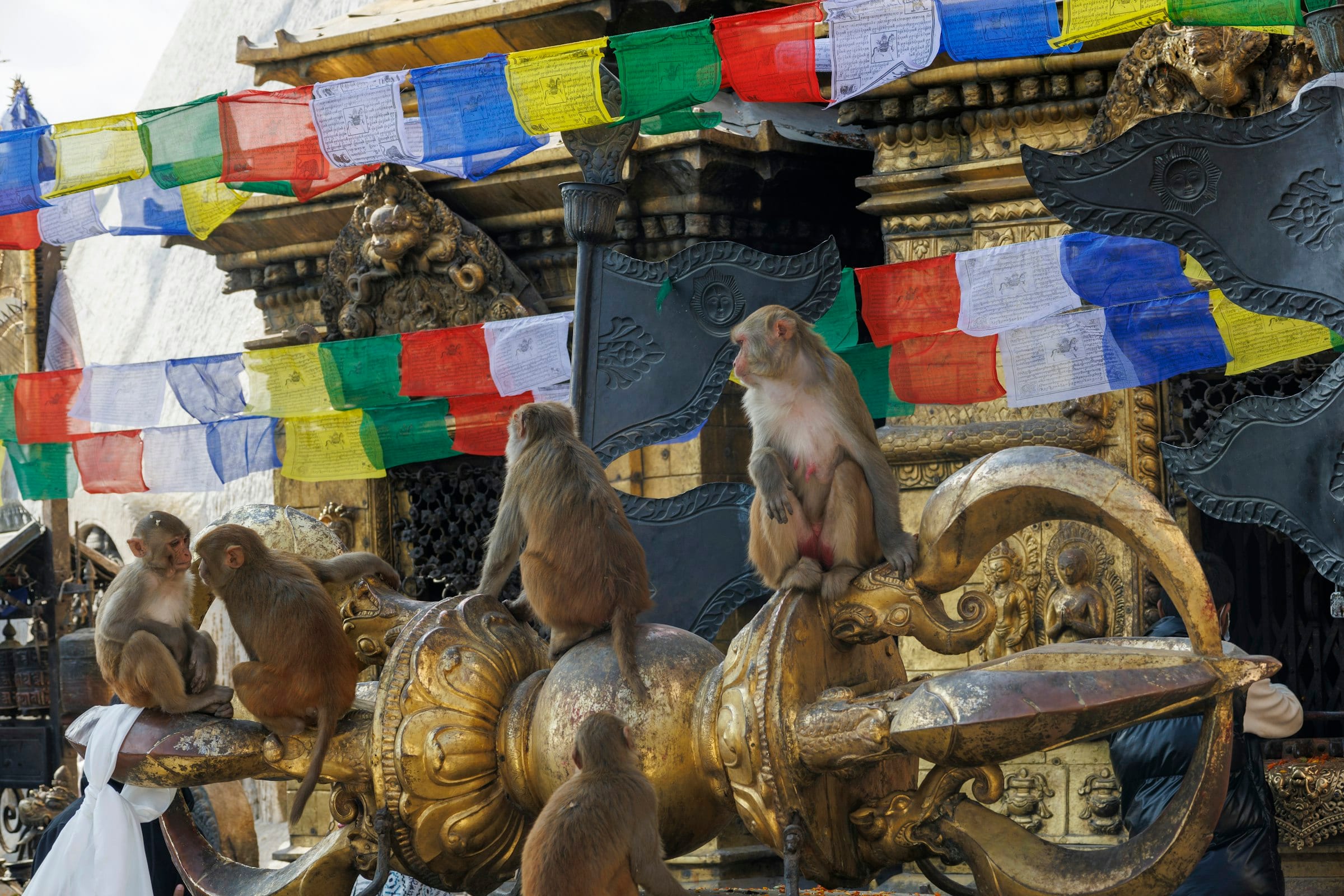 Rhesus macaques sitting on the gilded vajra at Swayambhunath
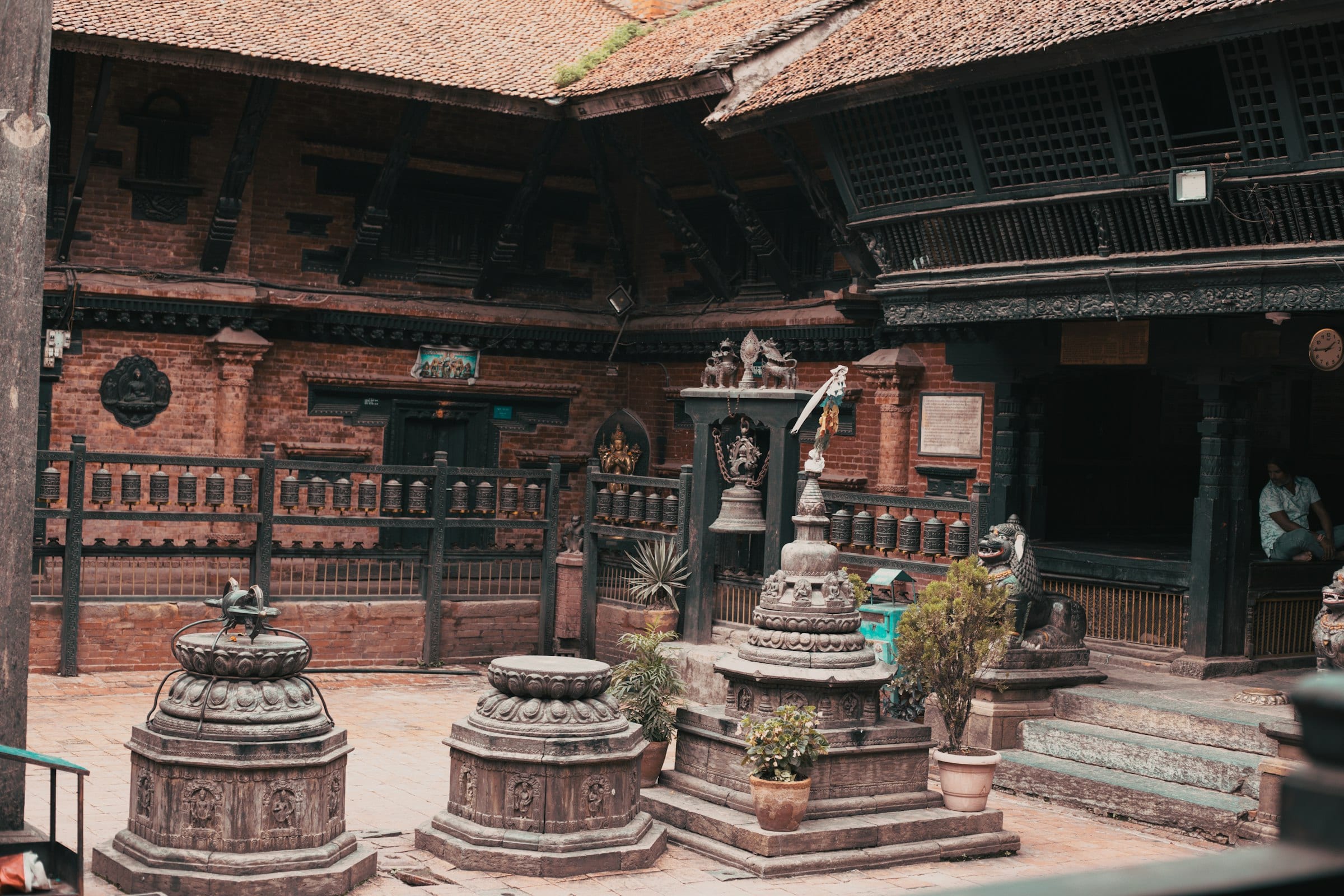 Small stone stupas in a brick monastery courtyard in Patan
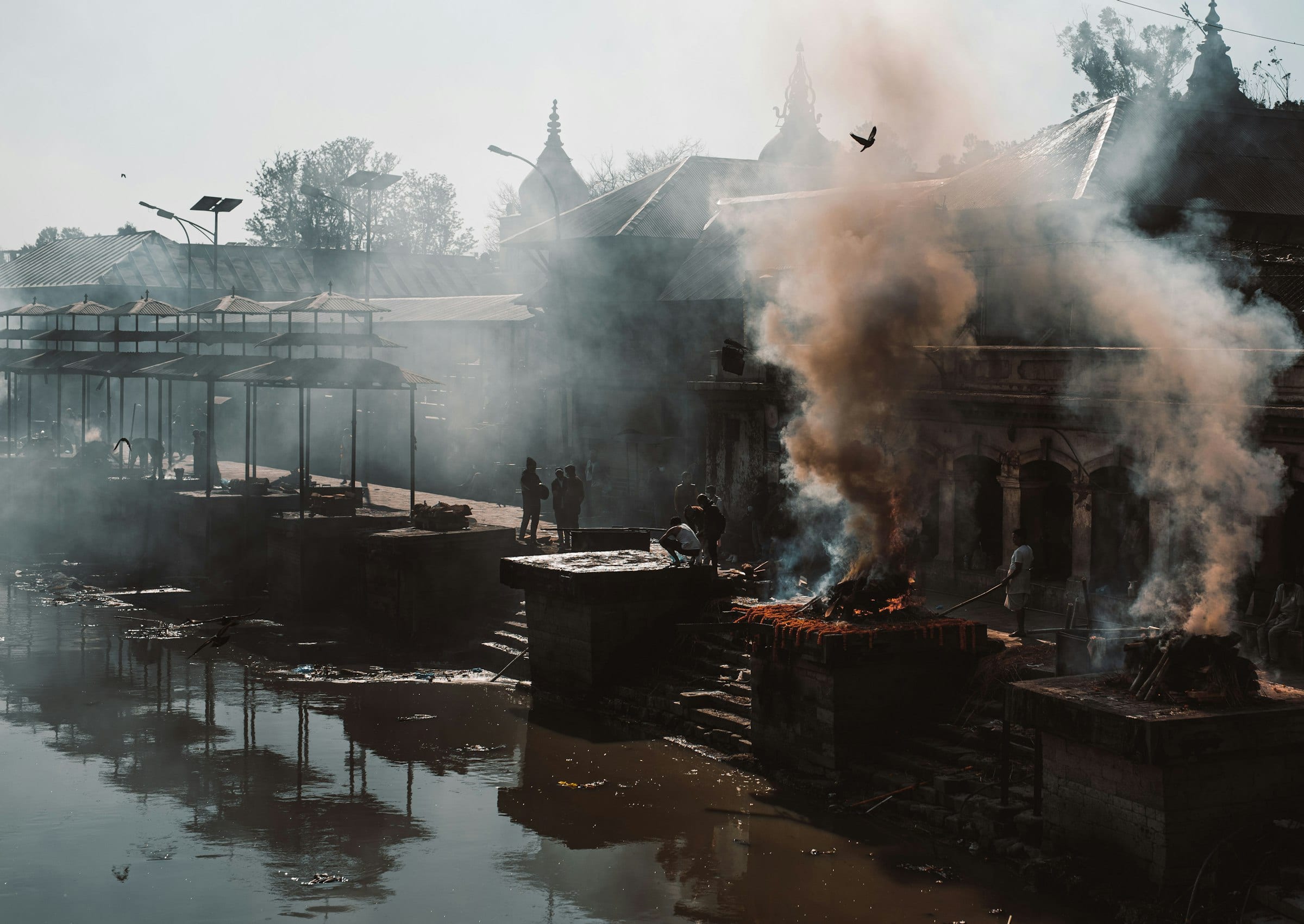 Smoke rising from the cremation ghats beside the Bagmati river
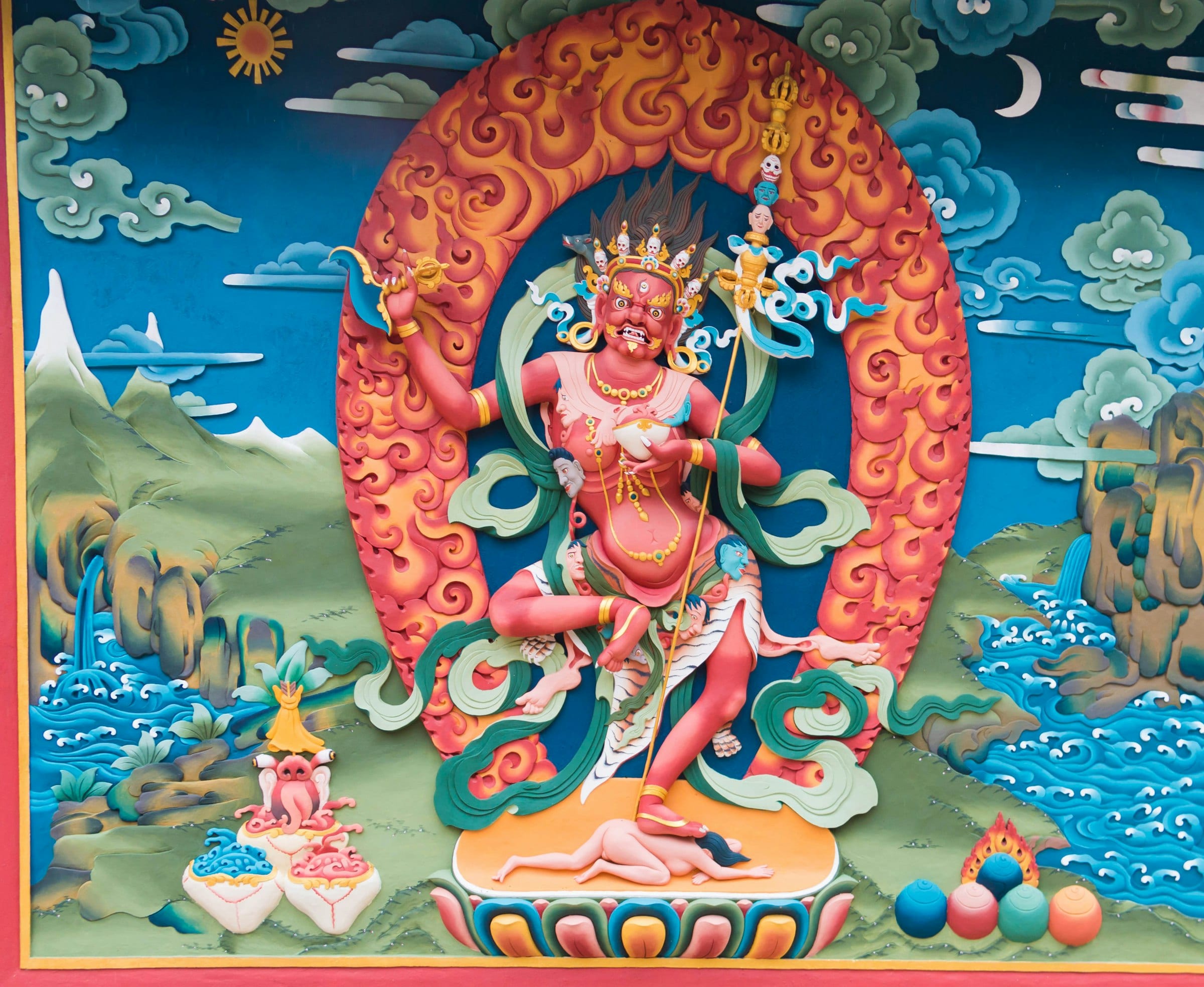 A brightly painted thangka of a Buddhist deity
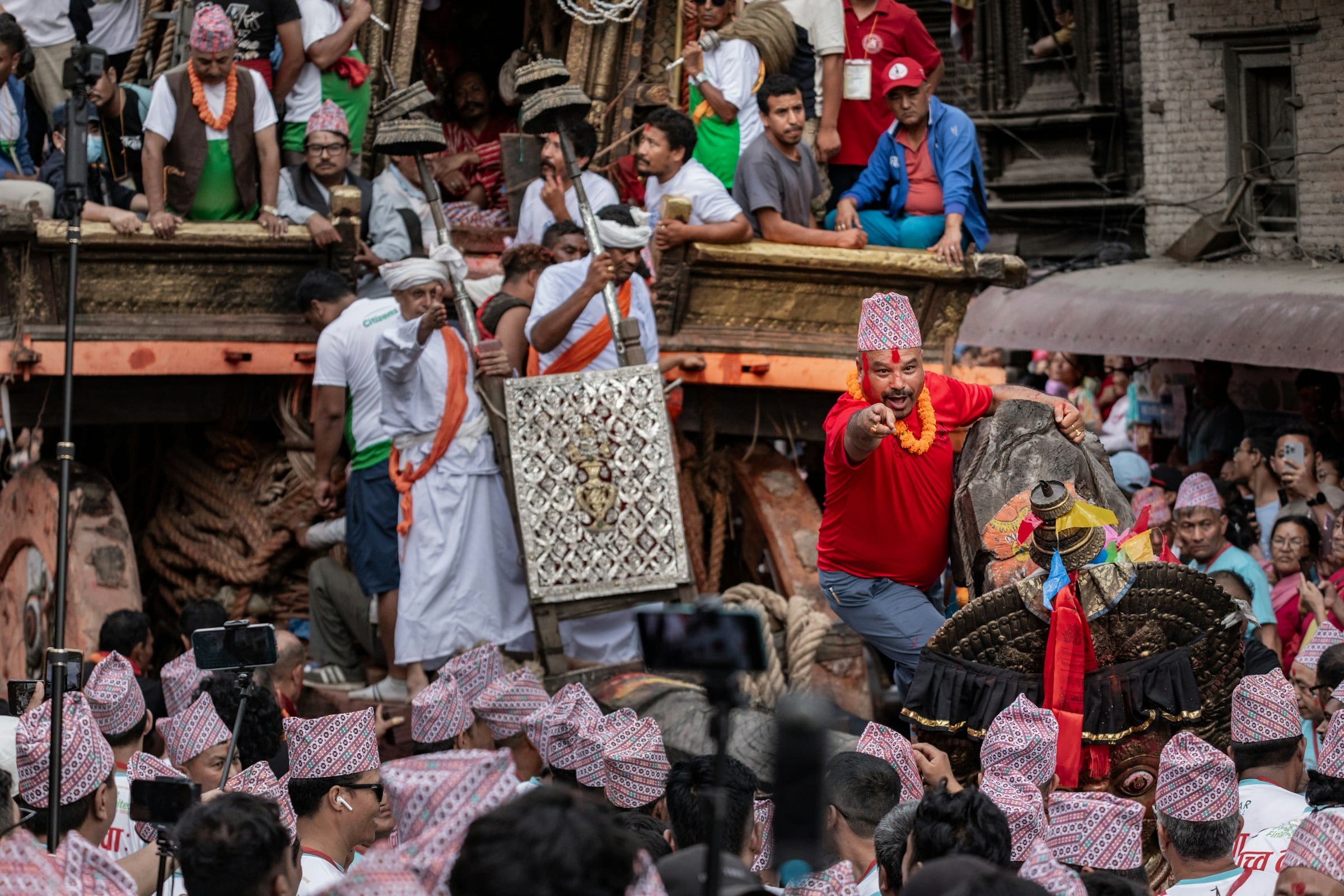 A festival procession in traditional dress through a valley town
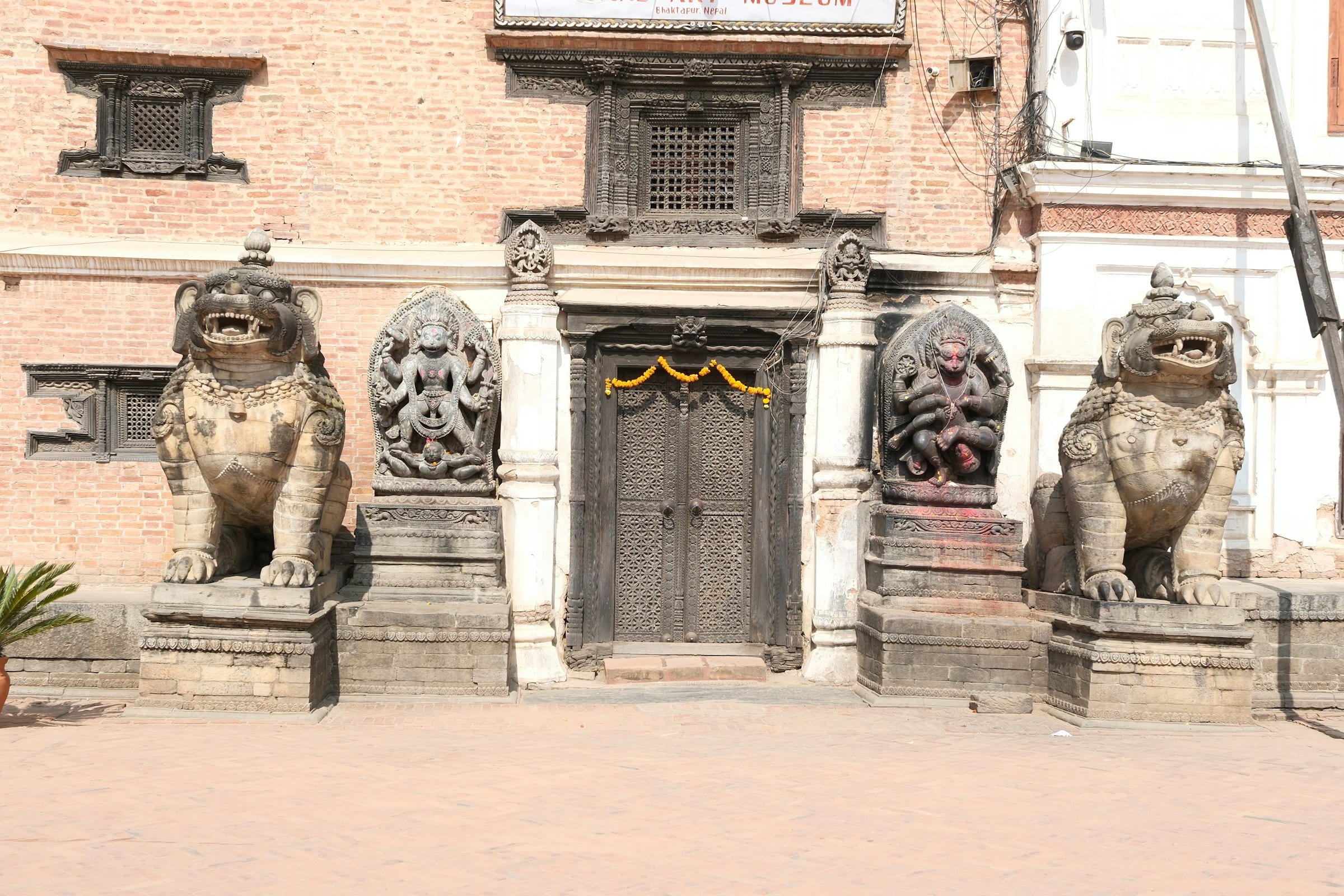 Stone guardian lions flanking a temple gate in Bhaktapur
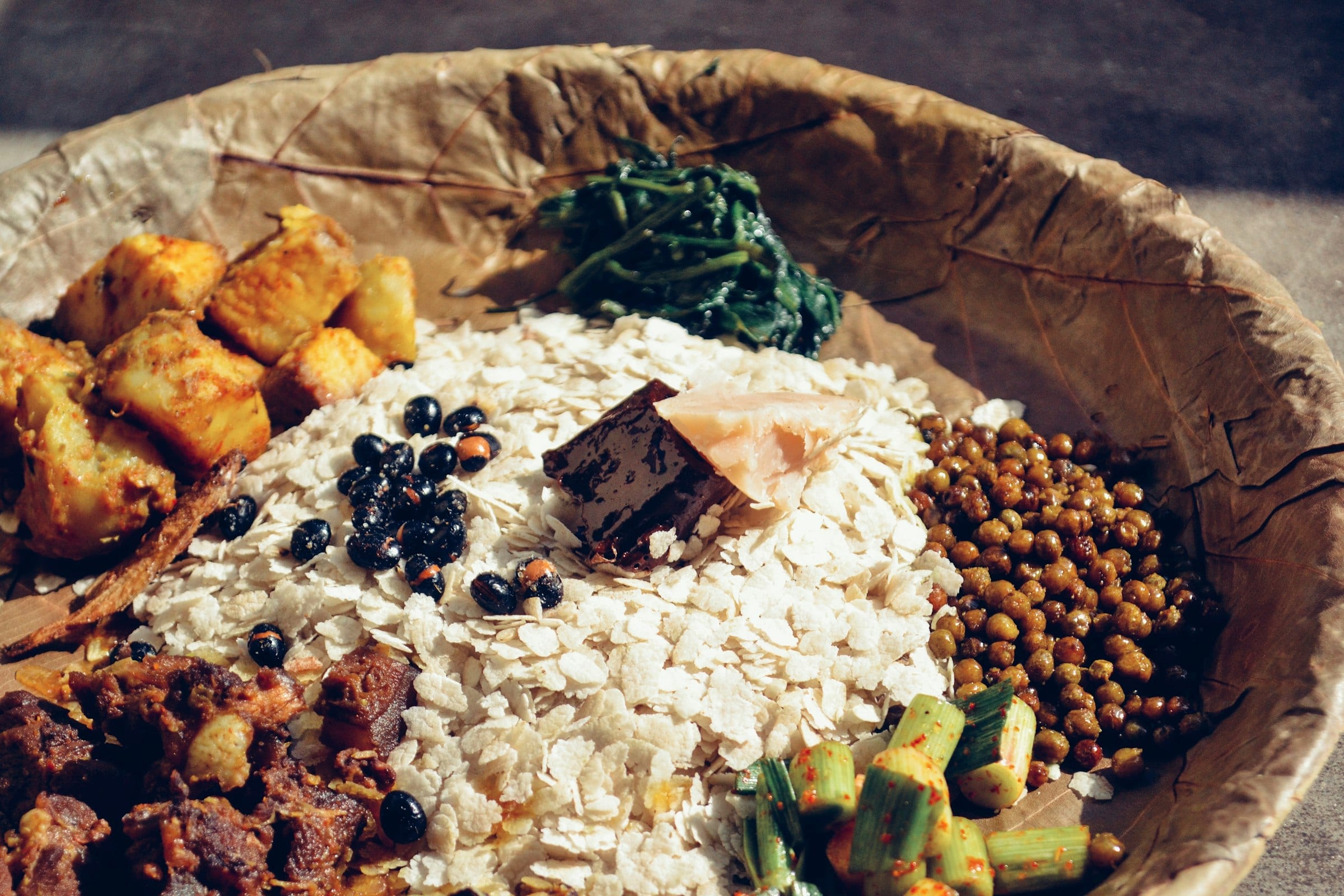 A samay baji platter of beaten rice, soya beans and spiced meat
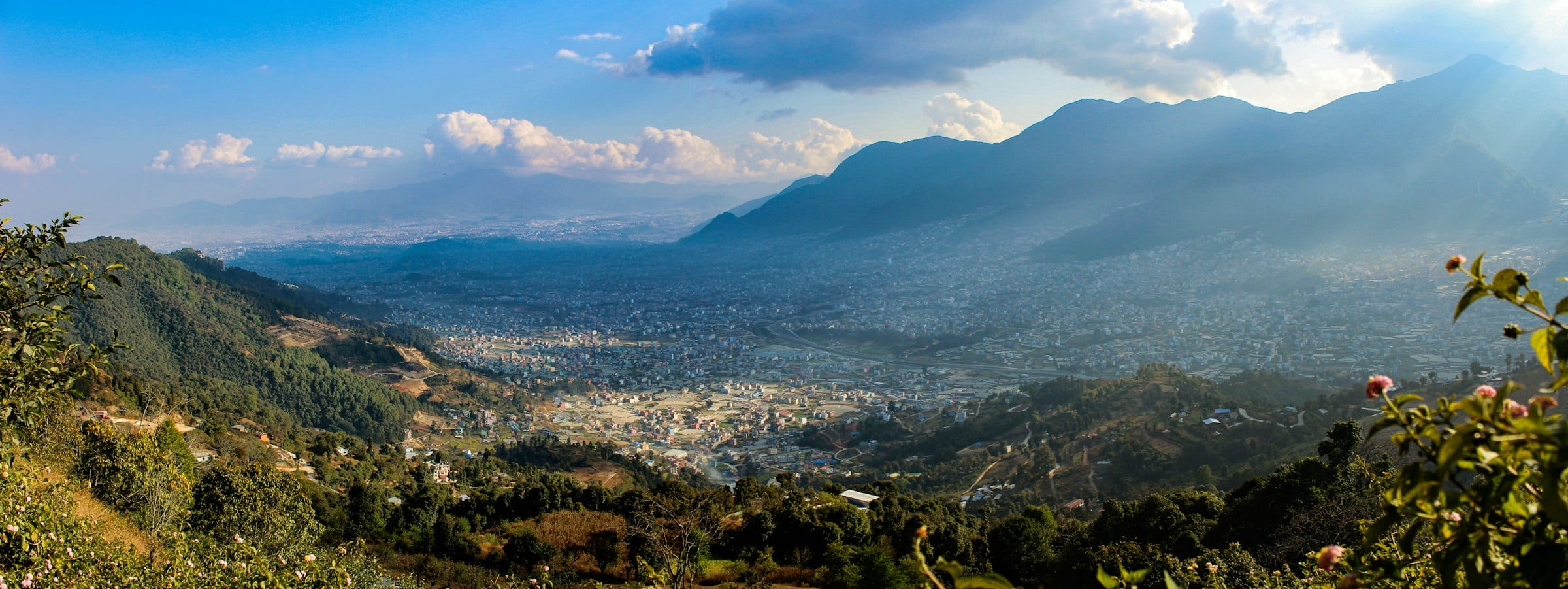 A valley town among green hills below the distant Himalaya
Common questions
Is a week too long for the Kathmandu Valley?
It is the question everyone asks, and the honest answer is that the valley holds seven UNESCO monument zones and more than 130 listed monuments inside about twenty kilometres. The one-day tours you will have seen cover four sites, and they cover them at roughly forty minutes each. This itinerary gives Bhaktapur a whole day and still leaves things in it. If you genuinely only have a day we will happily sell you that instead — just tell us, and we will not pretend the week is the only way to do it.
How fit do I need to be?
Not very. It is graded Easy: two to four hours on your feet a day, on flat brick and stone, at 1,400 m where nobody feels the altitude. The two exceptions are worth knowing about. Swayambhunath has 365 steps up its east stair, steep near the top, and there is a road to the west gate for anyone who would rather not. Bhaktapur is pedestrian throughout, so the vehicle drops you at the gate and collects you at the other side. Families, children and travellers in their seventies do this trip regularly.
Are the entrance fees really included?
Yes, and it is the line we would check on any competing quote. About NPR 12,700 a head is collected across these sites — Bhaktapur is the steepest single gate, and Patan, Pashupatinath, Boudhanath, Swayambhunath, Kathmandu Durbar Square and Changu Narayan all charge separately. Most tours list entrance fees under exclusions and hand you the bill on the day. Ours are bought in advance, your guide carries them, and you will not be asked for a rupee at any gate on the itinerary.
What is the best time of year to come?
The valley is a year-round destination — nothing here closes for a season. October to April gives the clearest air and the best chance of the Himalaya from Nagarkot, with cold mornings and comfortable days. March to May is warmer and hazier, with the rhododendron out on the ridges. The June-to-September monsoon brings afternoon rain rather than all-day rain, cuts the crowds sharply, and turns the valley green; it is the one window where the mountains from Nagarkot are unlikely.
Will I actually see Everest from Nagarkot?
On a clear morning you will see Ganesh Himal, Langtang Lirung, Dorje Lakpa and Gauri Shankar laid across the northern skyline, and that is the view that makes the night on the ridge worth it. Everest is visible from Nagarkot, small and far to the east, on perhaps one clear morning in four, and mostly between late October and February. Anyone who guarantees it is guessing. The ridge is also good for sunset the evening before, which is the half most itineraries forget.
What should I wear inside the temples?
Shoulders and knees covered is the whole of it — a light long-sleeved shirt and trousers or a long skirt. You will be asked to take your shoes off at some shrine entrances, so slip-ons save you time. Leather belts and bags are not allowed inside parts of the Pashupatinath complex. Nothing here requires a head covering. Comfortable shoes matter more than anything else: the brick and stone underfoot in Bhaktapur and Patan is uneven and centuries old.
Can I photograph the cremations at Pashupatinath?
The ghats are public and photography is not banned, but this is a family burning a relative in the open a few metres from you. Our guides ask you to shoot from the far bank if at all, never close, and never of the mourners. Put the camera down when a body is being carried past. Inside the main temple non-Hindus may not enter and photography does not arise. Elsewhere in the valley photography is welcome; the exceptions are the Kumari's courtyard in Kathmandu and the interiors of some monasteries at Boudhanath.
How much of the day is spent in the vehicle?
Less than you would fear, and more than the map suggests. The valley is only about 20 km across, but Kathmandu traffic makes 20 km an hour. The heaviest driving day is the descent from Nagarkot at around 38 km, which takes roughly ninety minutes; most other days are under 25 km in total and split into two short hops. Each city is walked once you are in it. If we are running behind, your guide will tell you what is at risk and let you choose what to drop.
What are the hotels like?
Five nights in a heritage-style hotel in or beside Thamel — brick and carved timber, a courtyard, twin rooms with attached bathrooms and reliable hot water, quieter than the Thamel address suggests. One night on the Nagarkot ridge in a Himalaya-facing room, which is the entire reason for that hotel and is the room type we book. Both are twin-share as standard. Single rooms are available at a supplement; ask and we will quote it before you pay anything.
Is the food included, and can you handle a special diet?
Six breakfasts, five lunches and three dinners. Lunches are in courtyard restaurants inside the cities we are in that day rather than back at the hotel, and at least two of them are Newari rather than tourist-menu: samay baji, chhoyla, bara, and juju dhau in Bhaktapur, which you should not skip. Vegetarian and vegan are effortless here — much of the Newar festival table is already vegetarian — and gluten-free is manageable with notice. Tell us when you book and your guide briefs each kitchen ahead of you.
Do the two of us get a private trip, or are we joined by others?
Every departure on this page runs privately from two travellers. The group-size table is a discount for the party you bring, not a threshold you have to reach: we never merge separate bookings to make a number up. Solo travellers can either take the single rate or ask to be told when another party is going out on the same dates, which we will do if you want it and never do without asking.
Can I change the order of the days, or swap something out?
Yes. On a private departure the itinerary is a proposal rather than a contract, and the two commonest changes are easy: moving Nagarkot to a different night around your flights, and dropping Kirtipur for a free afternoon of shopping. Some things are fixed by the place rather than by us — the Bagmati aarati is at 6 pm, the Boudhanath kora is a dusk event, and Bhaktapur is worth a whole day whatever else moves. Tell us at the briefing on day one and your guide will replan the week that evening.
Is it safe, and what about the 2015 earthquake damage?
The valley is safe for families, solo women and older travellers, and the ordinary risks are traffic and pickpocketing in crowds rather than anything dramatic. On the earthquake: the monument zones have been substantially rebuilt in the decade since, largely with traditional materials and Newar craftsmen, and the Kasthamandap in Kathmandu Durbar Square is back in its original timber. Some scaffolding remains, and your guide will show you what was lost as well as what stands — it is a real part of the story of these squares.
How much cash should I bring for the week?
USD 15–25 a day covers the meals not listed, drinks, tips and small purchases. Rupees only outside hotels: cards work in Thamel and in the better restaurants, and nowhere else on this itinerary. ATMs are everywhere in Kathmandu, capped around NPR 35,000 a withdrawal with a fee of about NPR 500. Because the entry fees are prepaid, the daily cash you need here is genuinely small. Tips for guide and driver are customary, appreciated, and entirely your call.
Can this be joined to a trek, or to Chitwan and Pokhara?
It is designed to be. This week works as the acclimatisation and culture end of a longer trip, either before a trek while your body settles at 1,400 m or afterwards while you wait for a flight home. The commonest combinations we book are this plus Chitwan for the jungle, this plus Pokhara and Mardi Himal for a first Himalayan trek, or this in front of Everest Base Camp. All of it goes on one booking, with one deposit and one point of contact.
Still deciding? The people who answer are the people who run the tour. Ask us anything: fitness, insurance, kit, or whether your dates are a sensible idea.
Message a tour specialistTravellers who booked this
The trips that most often go on the same booking: the jungle, the water, and the walking this week is the gentle start to.
EasyEasy4–5 hours a day · Below 3,500 mWell-made trails, teahouses close together, and nothing that needs a head for heights. Anyone who walks regularly at home will be comfortable. Short escapeEasyEasy4–5 hours a day · Below 3,500 mWell-made trails, teahouses close together, and nothing that needs a head for heights. Anyone who walks regularly at home will be comfortable.
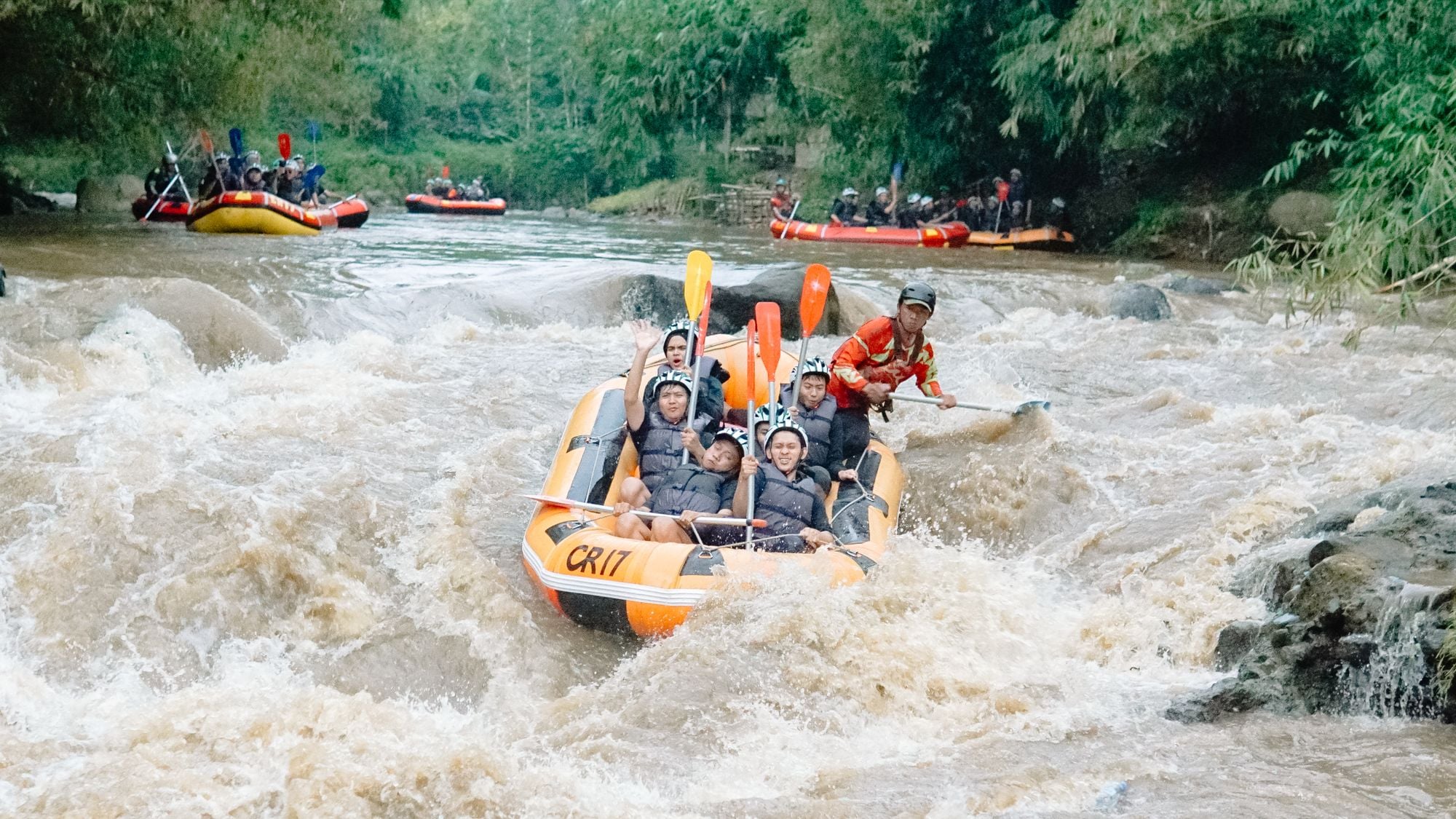 Weekend add-onModerateModerate5–6 hours a day · 3,500–4,500 mLonger days with real ascent, and at least one acclimatisation day built in. Some training helps; hill walking most weekends for two months is enough.
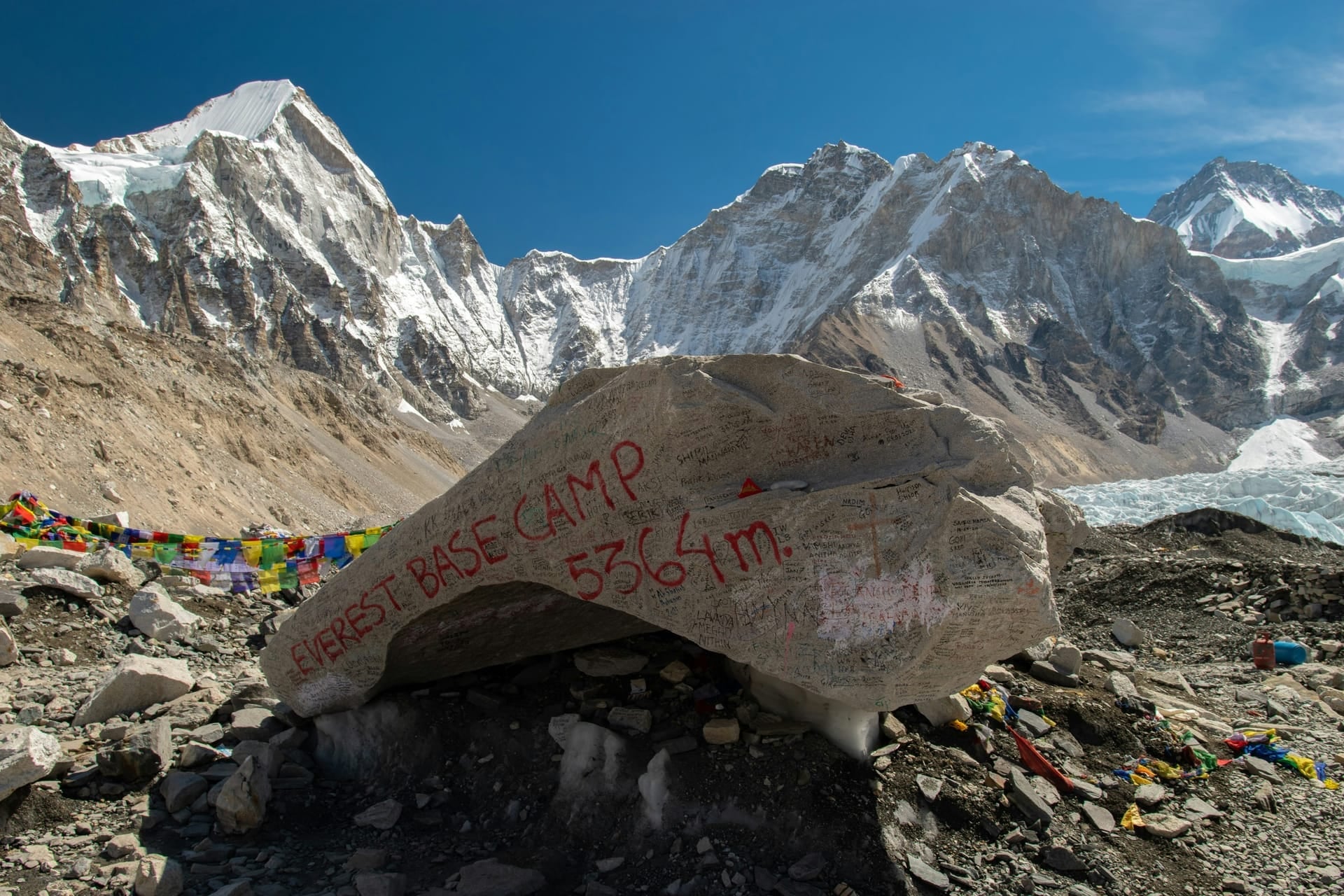 ChallengingChallenging6–7 hours a day · 4,500–5,600 mConsecutive days at altitude, cold nights and a pre-dawn start or two. You need to arrive fit rather than plan to get fit on the trail.